 KnowThis
Key Takeaways
Key Takeaways
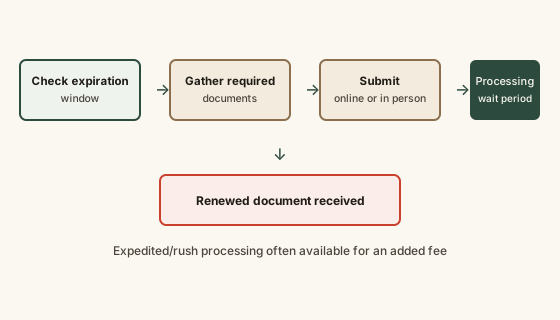
- 1Renewal generally follows four steps: check your eligibility window, gather required documents, submit the application, and wait through processing.
- 2Many countries require a passport to have several months of validity remaining beyond your travel dates, not just be technically unexpired — check this separately from the expiration date itself.
- 3Whether you can renew by mail/online or must apply in person as if for the first time usually depends on how recently your current document was issued and how it was originally obtained.
The concept
The most consequential mistake in this whole process usually isn't about the renewal steps themselves — it's travelers discovering, often at the airport, that their technically-valid passport doesn't meet a destination country's separate minimum validity requirement.
A traveler's passport doesn't expire for another four months, and they're planning international travel in six weeks. Is their passport automatically fine to travel with?
Worked examples
Example 1: A standard mail-in renewal (baseline case)
Example 2: A name change or significantly expired document (edge case / variation)
Example 3: Expedited renewal before urgent travel (real-world / applied case)
Someone discovers their passport has been expired for several years and they now need to renew it. Can they typically use the simplified mail-in renewal process?
How it works (visual)
Common mistakes
Common Mistakes
Assuming a not-yet-expired passport automatically meets every country's entry requirements.
→ Check your specific destination's minimum remaining-validity requirement separately from your passport's own expiration date, well before booking travel.
Waiting until right before a trip to start the renewal process.
→ Start renewal as soon as you know you'll need it — standard processing times can be weeks to months, and expedited options cost more and aren't guaranteed to fit every timeline.
Assuming your situation automatically qualifies for the simplified renewal process.
→ Check the specific eligibility criteria (recency of issuance, name changes, document condition) before assuming you can skip an in-person application.
Common misconception
“As long as your passport hasn't technically expired yet, you're fine to travel internationally.”
Many countries impose a separate minimum-validity requirement — commonly six months of remaining validity beyond your travel dates — as a condition of entry, independent of the passport's stated expiration date. A passport that's technically valid can still get a traveler denied boarding or entry if it doesn't meet the destination's specific requirement, which is exactly why checking this separately, well before travel, matters.
What to do next
What to do next
- Check your document's expiration date and your destination country's specific minimum-validity requirement separately, well before booking travel.
- Confirm whether you're eligible for simplified mail-in/online renewal or need to apply in person before starting the process.
- Start renewal well ahead of any planned travel — standard processing can take weeks to months depending on your issuing authority.
- Only use official government renewal channels — third-party sites charging extra fees for 'expedited' processing are a common source of confusion and unnecessary cost.