 KnowThis
Key Takeaways
Key Takeaways
- 1A mortgage is really two linked documents: a promissory note (the promise to repay) and a mortgage or deed of trust (the pledge of the property as collateral).
- 2The mortgage/deed of trust is what gives the lender the legal right to foreclose — take and sell the property — if the borrower stops making payments as promised.
- 3Monthly mortgage payments are calculated through amortization, blending interest and principal so the loan balance reaches zero by the end of the agreed term.
The concept
The calculator below shows the amortization mechanics directly — how principal, interest rate, and loan term combine into a single monthly payment figure.
A homeowner sees that their loan was "sold" to a different mortgage servicing company. Does this change the terms of their loan?
Worked examples
Example 1: Calculating a standard 30-year mortgage payment (baseline case)
Example 2: The same loan amount over 15 years instead of 30 (edge case / variation)
Example 3: Missing payments and the path toward foreclosure (real-world / applied case)
Which document specifically gives a mortgage lender the right to foreclose on a property?
How it works (visual)
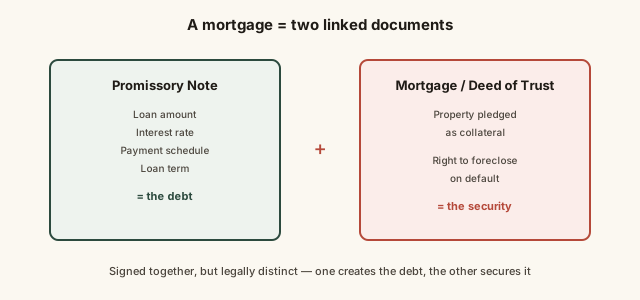
These two documents are signed together and function together, but they legally do different jobs — one creates the debt, the other secures it against the property.
Common mistakes
Common Mistakes
Assuming a mortgage is a single, simple document rather than a note plus a separate security instrument.
→ Understand the promissory note (the debt) and the mortgage/deed of trust (the collateral pledge) as two connected but legally distinct pieces.
Comparing loan offers only by monthly payment, without checking the interest rate, term, and total interest cost.
→ Compare the full picture: interest rate, term length, total interest paid over the life of the loan, and any fees — not just the monthly number.
Avoiding contact with a loan servicer after missing a payment out of concern it will accelerate foreclosure.
→ Contact the servicer promptly when facing hardship — many offer forbearance or modification options, and staying in contact generally preserves more options than going silent.
Common misconception
“If a mortgage loan is sold to a different company, the borrower has to renegotiate their loan terms from scratch.”
Selling a mortgage loan to a different servicer or investor is a routine industry practice that changes who collects payments, not the legally binding terms set in the original promissory note and mortgage. The rate, payment schedule, and term stay the same unless a separate, formal modification is agreed to.
Try it yourself
Calculates the principal-and-interest portion of a monthly mortgage payment based on loan amount, annual interest rate, and loan term. Does not include taxes, insurance, or other escrowed costs.
This is a simplified principal-and-interest estimate, not a loan offer or full payment quote — it excludes taxes, insurance, PMI, and fees, and actual loan terms and eligibility are determined by a lender.
What to do next
What to do next
- Understand that a mortgage is two documents: a promissory note (the debt) and a mortgage/deed of trust (the collateral pledge).
- Compare loan offers on interest rate, term, and total interest cost, not just the monthly payment number.
- Review the Closing Disclosure (or local equivalent) against the earlier loan estimate before closing.
- If facing missed payments, contact the loan servicer promptly to discuss hardship options rather than waiting.