 KnowThis
Key Takeaways
Key Takeaways
- 1A deed is the document that legally transfers property ownership — it's distinct from a mortgage, which is a separate document securing a loan against the property.
- 2Different deed types carry different levels of guarantee: a warranty deed promises clear title and defense against claims, while a quitclaim deed transfers only whatever interest the seller has, with no guarantee at all.
- 3Recording a deed with the local government office (often a county recorder or land registry) is what makes the ownership transfer part of the public record, which matters for resolving future disputes.
The concept
The practical stakes of deed type show up most clearly when something goes wrong after the sale — like a previously undisclosed claim on the property surfacing years later.
A buyer receives a quitclaim deed from a seller. Years later, someone else produces evidence they have a legitimate competing claim to part of the property. What can the buyer typically do about it under the deed itself?
Worked examples
Example 1: A standard home purchase using a warranty deed (baseline case)
Example 2: A parent transferring property to an adult child using a quitclaim deed (edge case)
Example 3: Discovering a deed was never recorded (real-world / applied case)
Is a deed the same document as a mortgage?
How it works (visual)
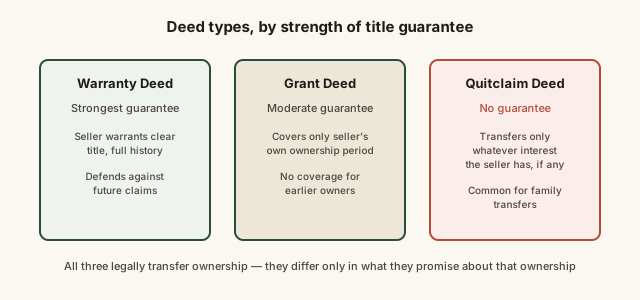
The type of deed used doesn't change who legally ends up owning the property — it changes how much protection the buyer has if that ownership turns out to be incomplete or disputed.
Common mistakes
Common Mistakes
Assuming all deeds provide the same level of protection to the buyer.
→ Check which deed type is being used in a transaction — a warranty deed and a quitclaim deed carry very different guarantees about the title.
Treating a deed and a mortgage as interchangeable terms.
→ Remember a deed transfers ownership; a mortgage secures a loan against the property — they're separate documents serving separate functions.
Skipping title insurance or a title search on the assumption that the deed alone guarantees a clean title.
→ Consider a title search and title insurance for significant purchases, since even a warranty deed's guarantee is only as good as the seller's ability to make good on it.
Common misconception
“Once you have a deed, your ownership is automatically guaranteed and can never be disputed.”
A deed transfers whatever legal interest is being conveyed, but it doesn't independently verify that the interest is free of prior claims, liens, or disputes — the level of guarantee about that depends on the deed type used, and even a strong warranty deed's protection is only as reliable as the seller's ability to honor it. This is exactly why title searches and title insurance exist as separate protective steps.
What to do next
What to do next
- Identify which type of deed is being used in a transaction and understand what level of guarantee it does (or doesn't) provide.
- For a purchase from an unrelated seller, favor a warranty deed over a quitclaim deed where possible.
- Confirm the deed will be properly recorded with the local land records office after signing.
- Consider a title search and title insurance for significant real estate purchases, regardless of deed type.
- For an unfamiliar or complex property transfer, consult a real estate attorney or title company before signing.