 KnowThis
Key Takeaways
Key Takeaways
- 1A security deposit is refundable by design — it exists to cover unpaid rent or damage beyond normal wear and tear, not to function as an extra, non-refundable fee.
- 2Many jurisdictions cap how much a landlord can charge as a deposit (often expressed as a multiple of monthly rent) and set a deadline for returning it after move-out, but the exact numbers vary widely by state and country.
- 3Normal wear and tear (faded paint, minor carpet wear from ordinary use) is generally not a valid reason to withhold a deposit — actual damage from neglect or misuse is.
The concept
The calculator below illustrates one common way deposit limits are expressed — as a multiple of monthly rent — though the actual multiple allowed (if a cap exists at all) depends entirely on local law.
A tenant moves out after two years. The carpet shows some general fading and light wear from ordinary foot traffic, but no stains, tears, or damage. Can the landlord deduct carpet replacement cost from the deposit?
Worked examples
Example 1: A straightforward full deposit return (baseline case)
Example 2: A partial deduction for actual damage (edge case)
Example 3: A landlord who misses the legal deadline to return or explain the deposit (real-world / applied case)
Are security deposit caps and return deadlines the same everywhere?
How it works (visual)
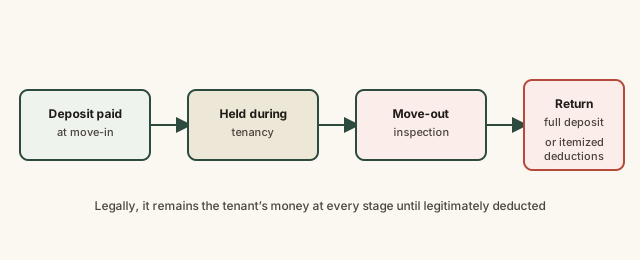
The deposit's legal status doesn't change while it's held — it remains the tenant's money, which is why the return-or-itemize step at the end is treated as an obligation, not a courtesy.
Common mistakes
Common Mistakes
Assuming a security deposit works the same way, with the same caps and deadlines, everywhere.
→ Look up the specific rule for your state, province, or country before assuming a number you've heard elsewhere applies.
Treating any deduction from the deposit as automatically legitimate without an itemized explanation.
→ Request (or provide, as a landlord) a written, itemized list of any deductions distinguishing damage from normal wear and tear.
Not documenting the unit's move-in condition, making move-out disputes about condition harder to resolve fairly.
→ Take dated photos or a written move-in condition report at the start of the tenancy, ideally agreed on by both parties.
Common misconception
“A security deposit is basically the landlord's money once it's been paid — the tenant shouldn't expect much of it back.”
A security deposit remains the tenant's money, held by the landlord as a safeguard rather than transferred as income. The default outcome, when no unpaid rent or damage beyond normal wear and tear exists, is a full refund — deductions require a specific, legitimate reason, not general discretion.
Try it yourself
Some jurisdictions cap deposits as a multiple of monthly rent (for example, 'no more than one and a half months' rent'). This is illustrative only — check your local law for the actual cap, if any.
This is a simple illustration of how deposit caps are sometimes expressed, not a statement of any actual legal limit. Deposit caps vary by jurisdiction and many places have no cap at all — check your local landlord-tenant law for the real figure.
What to do next
What to do next
- Look up the security deposit cap, holding rules, and return deadline that actually apply in your state, province, or country.
- Document the unit's condition at move-in with dated photos, ideally with the landlord's sign-off.
- At move-out, request a walkthrough or inspection and ask for an itemized list of any proposed deductions.
- If a deposit isn't returned or explained within the applicable legal deadline, check what remedy your local law provides before assuming nothing can be done.