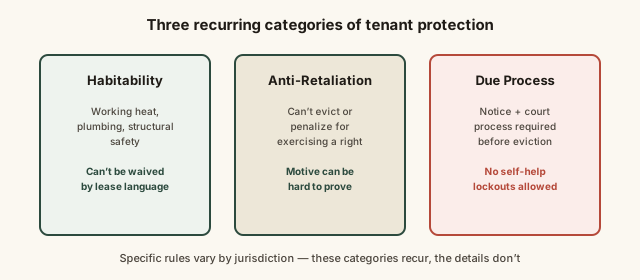
Tenant rights are the legal protections that generally accompany renting a home — most commonly a right to a habitable living space, protection from certain kinds of retaliation, and a required legal process before eviction — and while the specific rules vary significantly by state, province, or country, these three categories of protection recur in some form across most rental law systems.
Reading time
— 4 min
Updated
— Aug 26, 2026
Fact-reviewed
— Aug 26, 2026
Key Takeaways
Key Takeaways
1Three categories of tenant protection recur across most jurisdictions: a right to habitable conditions, protection from retaliation for exercising legal rights, and a required legal process before eviction.
2Habitability generally can't be waived by lease language — a lease clause saying a landlord isn't responsible for repairs doesn't override a jurisdiction's habitability standard where one exists.
3A landlord generally can't remove a tenant, their belongings, or utilities without going through the legally required eviction process (a 'self-help eviction'), even if the landlord believes they're in the right.
The concept
Tenant rights are the basic protections most renters have, regardless of what a specific lease says. The core ones that show up almost everywhere in some form: the home has to actually be livable (safe, working plumbing and heat), a landlord generally can't punish a tenant for asking for repairs or reporting a problem, and a landlord can't just remove a tenant without going through a proper legal process. The exact rules differ by location, but this general shape repeats widely.
These three protections work independently of each other and independently of the lease's own wording, which is exactly why a lease clause that appears to waive one of them often isn't actually enforceable.
Quick check
A lease includes a clause stating the landlord is not responsible for any repairs during the tenancy. The heating system breaks in winter. Does this clause relieve the landlord of any repair obligation?
Worked examples
Example 1: Requesting a repair for a habitability issue (baseline case)
A tenant notices a persistent plumbing leak causing water damage and notifies the landlord in writing, requesting repair within a reasonable time. This is the normal exercise of a habitability-related right — a functioning plumbing system generally falls within what most jurisdictions define as a basic habitability requirement, and the written notice creates a documented record of the request and its date.
Example 2: A landlord attempting a lockout instead of formal eviction (edge case)
Frustrated by a rent dispute, a landlord changes the locks on a tenant's unit while the tenant is at work, without any court order. Most jurisdictions treat this kind of self-help action as illegal regardless of whether the underlying rent dispute has merit — the landlord is generally required to go through the formal notice-and-court eviction process rather than acting unilaterally, and a tenant facing this situation typically has a strong basis to seek immediate help from a local tenant rights organization, legal aid office, or law enforcement.
Example 3: A rent increase shortly after a code complaint (real-world / applied case)
A tenant reports a housing code violation to a local inspection office. Two weeks later, the landlord announces a significant rent increase or a decision not to renew the lease. If retaliation protections apply in that jurisdiction, the close timing between the complaint and the adverse action can be relevant evidence, though proving the increase was specifically motivated by the complaint (rather than some coincidental, legitimate business reason) is often the harder practical question — this is a genuinely fact-specific determination best evaluated with a local tenant rights organization or attorney rather than assumed either way.
Quick check
Can a landlord remove a tenant's belongings from a unit without going through a court eviction process, if the landlord believes the tenant is significantly behind on rent?
How it works (visual)
Three core categories of tenant protection
These categories recur widely, but the specific rules, thresholds, and enforcement mechanisms within each one vary significantly by jurisdiction.
Common mistakes
Common Mistakes
✕
Assuming a lease clause disclaiming a repair obligation is automatically enforceable.
→ Recognize that habitability protections, where they apply, generally can't be waived by lease language — check local housing codes rather than relying on the lease's wording alone.
✕
Not documenting repair requests or complaints in writing.
→ Put repair requests and code complaints in writing (email or letter) and keep copies, since this creates a timeline that matters if a retaliation or habitability dispute arises later.
✕
Assuming any self-help action by a landlord (lockout, utility shutoff, seizing belongings) is illegal only if done maliciously.
→ Understand that most jurisdictions prohibit self-help evictions outright, regardless of the landlord's underlying motive or how valid their claim might be.
Common misconception
“A landlord can change the locks or shut off utilities to remove a tenant, as long as the tenant genuinely owes back rent.”
Owing back rent is generally not a legal basis for a landlord to bypass the formal eviction process. Most jurisdictions require a specific notice-and-court procedure before a tenant can be lawfully removed, and prohibit unilateral actions like changing locks or shutting off utilities regardless of how valid the underlying rent claim is.
What to do next
What to do next
Look up the specific tenant rights and eviction procedures that apply in your state, province, or country.
Put repair requests and complaints about the unit's condition in writing, and keep dated copies.
If facing a lockout, utility shutoff, or removal of belongings without a court process, contact a local tenant rights organization or law enforcement promptly.
If you suspect retaliation after exercising a legal right, document the timeline and consult a local tenant rights organization or attorney.
FAQ
FAQ
Related terms
Related terms
Habitability
The legal standard that a rental unit must meet basic conditions for safe, livable occupancy — such as working plumbing, heat, and structural safety — regardless of what the lease says.
Retaliatory eviction
An attempt by a landlord to evict, penalize, or non-renew a tenant specifically because the tenant exercised a legal right, such as requesting repairs or reporting a code violation — generally prohibited where recognized by law.
Due process (in eviction)
The requirement that a landlord follow a specific, legally defined notice-and-court process before removing a tenant, rather than removing them unilaterally (a 'self-help' eviction).
A tenant moves out after two years. The carpet shows some general fading and light wear from ordinary foot traffic, but no stains, tears, or damage. Can the landlord deduct carpet replacement cost from the deposit?
This entry was researched from public sources and drafted with AI-assisted tools, then edited — errors are still possible. Spot one, or want a topic covered? Read our disclaimer.
 KnowThis