 KnowThis
Key Takeaways
Key Takeaways
- 1A rental agreement is a set of separately enforceable clauses — rent, term, deposit, maintenance, rules, and termination each function as their own mini-contract within the whole.
- 2A lease with a fixed term generally can't be changed or exited early by either side without cause, while a month-to-month agreement renews automatically and can usually be ended with proper notice.
- 3The clauses that cause the most disputes later are usually the ones skimmed fastest at signing: subletting rules, early termination terms, and what condition the unit must be returned in.
The concept
Because each clause is independently enforceable, the practical skill isn't reading the whole document once — it's checking each clause against a short mental list of questions specific to that clause.
A tenant signs a 12-month lease. Three months in, the landlord wants to raise the rent because a neighboring unit is renting for more. Can the landlord do this mid-lease?
Worked examples
Example 1: Reading a standard 12-month lease's core clauses (baseline case)
Example 2: A subletting clause that quietly forbids something the tenant assumed was fine (edge case)
Example 3: Comparing a lease renewal offer against the original terms (real-world / applied case)
A month-to-month tenant wants to move out. What generally governs how much advance notice they need to give?
How it works (visual)
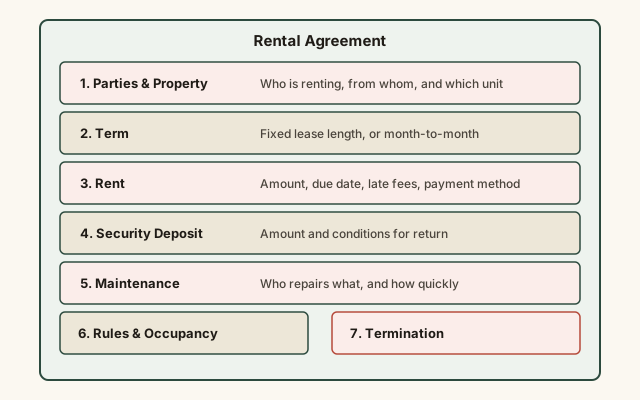
Each labeled section functions as its own independent promise — a violation in one section doesn't depend on, or excuse, compliance in another.
Common mistakes
Common Mistakes
Skimming the whole lease once and assuming it's understood, rather than checking each clause against a specific question.
→ Go clause by clause: for rent, deposit, maintenance, rules, and termination, ask what exactly this section obligates each side to do.
Assuming a verbal side agreement with the landlord overrides a written lease clause.
→ Get any change to a signed lease's terms in writing as a signed amendment — verbal modifications are hard to enforce and often don't hold up against the written document.
Not checking the subletting, guest, and renewal clauses because they seem unlikely to matter at signing time.
→ Read these clauses even if they don't seem relevant yet — plans change, and violating an overlooked clause is still a lease violation regardless of intent.
Common misconception
“As long as rent is paid on time and in full, nothing else in the lease really matters.”
A rental agreement is enforced clause by clause, not as a single pass/fail on rent payment. Violating a separate clause — subletting without permission, keeping an unauthorized pet, or failing to give proper notice before moving out — can still constitute a breach of the lease even when rent has been paid perfectly, because each clause is its own independent obligation.
What to do next
What to do next
- Before signing, read the term, rent, deposit, maintenance, occupancy/rules, and termination clauses individually, not as one continuous block.
- Confirm the notice period required to end the tenancy, and how the agreement handles renewal (automatic vs. requiring action).
- Check the subletting and guest clauses even if they don't seem relevant right now — plans change during a lease term.
- Get any verbal agreement or change to lease terms put into writing and signed by both parties.
- If a clause is unclear or seems unusual, ask a local tenant rights organization or a licensed attorney to review it before signing.