 KnowThis
Key Takeaways
Key Takeaways
- 1Cold temperatures themselves don't directly cause illness — 'catching a cold' from being outside in the cold is a well-documented misconception, per CDC and NIH.
- 2Colder months drive indoor crowding (more shared, enclosed time indoors), which increases transmission opportunities for respiratory viruses independent of temperature itself.
- 3Lower indoor humidity in winter (heated indoor air holds less moisture) may help some respiratory viruses, including influenza, remain airborne and infectious longer, adding a second, separate seasonal mechanism.
The concept
Separating "cold weather" from "the actual transmission mechanisms that happen to correlate with cold weather" clarifies why staying warm outdoors doesn't by itself prevent illness, while indoor ventilation and hygiene during high-transmission seasons genuinely can help.
Someone goes outside in cold weather without a jacket and later gets a cold. Did the cold air itself cause the illness?
Worked examples
Example 1: Office flu spread during winter (baseline case)
Example 2: A tropical region with a different, non-winter respiratory illness season (edge case / variation)
Example 3: Improving indoor ventilation during high-transmission season (real-world / applied case)
Why might running a humidifier during winter be a more mechanistically relevant illness-prevention step than simply dressing warmly?
How it works (visual)
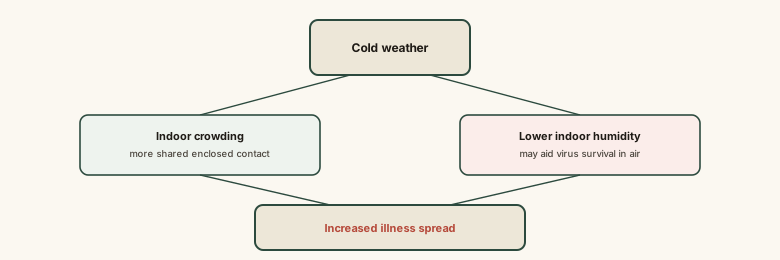
The key structural detail is that there's no direct arrow from cold weather to illness — both real mechanisms route through an intermediate factor, which is exactly why staying warm alone doesn't address either one.
Common mistakes
Common Mistakes
Assuming cold air exposure directly causes a cold or flu.
→ Remember illness requires actual virus exposure — cold air itself hasn't been shown to cause illness without that exposure.
Relying on 'staying warm' as a primary illness-prevention strategy during high-transmission season.
→ Focus on mechanisms that actually affect transmission: ventilation, humidity, hand hygiene, and reducing prolonged close indoor contact during high-transmission periods.
Assuming seasonality only applies to cold-climate regions with a winter.
→ Recognize that tropical regions show their own seasonal illness patterns tied to humidity and crowding cycles, confirming the mechanism isn't cold temperature specifically.
Common misconception
“Going outside with wet hair or without a coat in cold weather will give you a cold.”
Controlled studies exposing people to cold temperatures without virus exposure have not demonstrated cold alone causing illness — a cold or flu requires actual transmission of a specific virus. The real seasonal drivers are indoor crowding (more shared enclosed contact time) and lower indoor humidity potentially aiding some viruses' airborne survival, both of which happen to correlate with, but aren't caused by, cold outdoor temperature itself.
What to do next
What to do next
- Prioritize indoor ventilation (cracking windows, using exhaust fans) during high-transmission winter months, not just staying warm.
- Consider a humidifier to counteract low indoor humidity from heating during winter.
- Maintain hand hygiene and consider reducing prolonged close indoor contact during active local high-transmission periods.
- Get a seasonal flu vaccine if appropriate for you, per your doctor's guidance, ahead of peak transmission season.