 KnowThis
Key Takeaways
Key Takeaways
- 1A stone is a fixed, exact unit: 1 stone = 14 pounds, no rounding involved.
- 2In metric terms, 1 stone ≈ 6.35029 kilograms — an irregular figure because the stone was never designed with the metric system in mind.
- 3The UK legally adopted the metric system for trade decades ago, but stone survives specifically in the narrow, conversational context of describing a person's body weight.
The concept
Why does the UK still use 'stone' for body weight but not for most other everyday measurements?
Worked examples
Example 1: Converting a stated body weight to pounds and kilograms (baseline case)
Example 2: Handling a "stone and pounds" compound figure (edge case / variation)
Someone's weight is listed as '9 stone 6'. What does the '6' represent?
Example 3: A UK-US medical record mismatch (real-world / applied case)
How it works (visual)
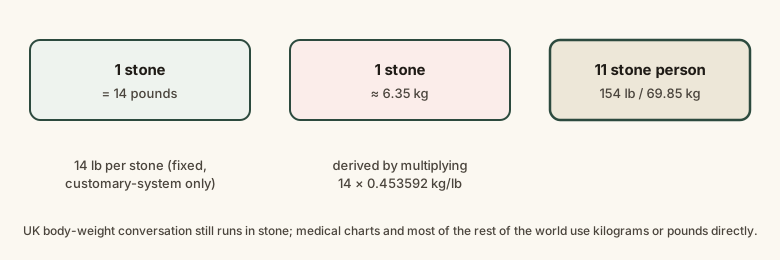
The stone-to-pound relationship (14) is a clean whole number because both units belong to the same historical customary system. The stone-to-kilogram relationship (6.35029) is irregular precisely because it crosses into the metric system, which the stone was never designed to relate to.
Common mistakes
Common Mistakes
Reading a compound 'stone N' figure as a decimal (treating '12 stone 4' as 12.4 stone instead of 12 stone plus 4 pounds).
→ Convert the stone and the pounds separately: multiply the stone count by 14, then add the pounds figure directly — don't treat the second number as a decimal fraction.
Assuming stone is used for anything other than body weight in modern UK usage.
→ Outside of body weight, the UK almost universally uses either metric units or pounds directly for weight — stone doesn't typically appear on food packaging, shipping labels, or scientific measurements.
Confusing stone (a UK/Irish body-weight unit) with the informal US phrase 'stone weight,' which isn't a standard unit at all.
→ If a US source uses 'stone,' check context carefully — it may be a loose, non-standard reference rather than the exact 14-pound UK unit.
Common misconception
“Stone is an obsolete unit that nobody actually uses anymore, just a historical curiosity.”
Stone remains in active, everyday conversational use in the UK and Ireland specifically for body weight — it isn't a dead unit, just a narrowly scoped one. UK gyms, casual conversation, and even some UK media routinely report a person's weight in stone, even though the same country's road signs (miles aside), packaged food, and medical records mostly run on metric or pounds.
A US-based reader sees a UK article stating someone weighs '15 stone.' What is the safest way to interpret this?
Try it yourself
What to do next
What to do next
- Memorize the one figure that matters: 1 stone = 14 pounds, exactly.
- When you see a compound figure like '12 stone 4', treat the second number as whole pounds, not a decimal fraction of a stone.
- For kilogram conversions, either multiply stone by 6.35029 directly, or chain through pounds (stone × 14, then × 0.453592).
- In any medical or official context involving a UK weight figure, confirm the unit explicitly — 'stone' should never be silently assumed to mean 'pounds' or 'kilograms'.