 KnowThis
Key Takeaways
Key Takeaways
- 1A unit rate is a ratio simplified so the denominator is exactly 1 — 'dollars per ounce' or 'miles per hour' are both unit rates, found the same way: divide the total by the quantity.
- 2Unit rates make differently sized things directly comparable — a bigger, more expensive package can still be the better deal once both are reduced to price per single unit.
- 3Pace (time per distance, like minutes per mile) is a unit rate too, just inverted from speed (distance per time) — both describe the same motion from opposite directions of the same division.
The concept
Once the single-division habit is automatic, unit rates stop looking like a special math topic and start looking like the natural way to compare almost anything priced, timed, or measured in bulk.
A 12-ounce box costs $3.60 and a 20-ounce box costs $5.60. Which is the better deal per ounce?
Worked examples
Example 1: A basic price-per-unit comparison (baseline case)
Example 2: Speed and pace as inverse unit rates (edge case / variation)
Runner A has a pace of 8 minutes per mile. Runner B has a pace of 9 minutes per mile. Who is faster?
Example 3: Comparing job offers by an hourly unit rate (real-world / applied case)
How it works (visual)
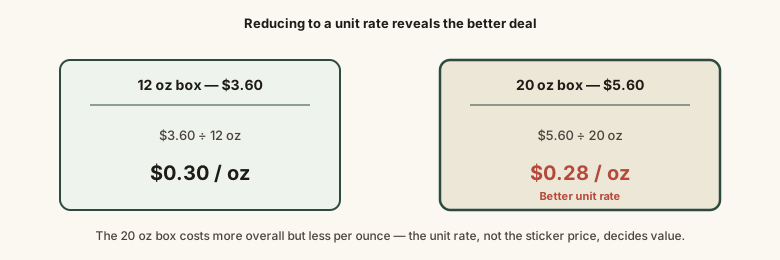
Neither box's sticker price can be compared directly, since the quantities differ — only after both are divided down to price-per-ounce does an honest comparison become possible.
Common mistakes
Common Mistakes
Comparing total prices directly between differently sized packages, instead of reducing both to a unit rate first.
→ Always divide price by quantity for both options before deciding which is the better deal — the larger package isn't automatically cheaper per unit.
Confusing speed and pace, or assuming a bigger pace number means faster.
→ Speed (distance/time) is faster when bigger; pace (time/distance) is faster when smaller — they're inverses of each other, not the same kind of number.
Comparing rates that aren't on the same basis (e.g. a weekly rate against a biweekly total) without converting both to the same time unit first.
→ Convert every rate to the same denominator (hourly, weekly, whatever's common) before comparing — mixing time bases silently distorts the comparison.
Common misconception
“The item with the lower total price, or the item that costs more per package, tells you which is the better deal.”
Total price only tells you the better deal when the quantities being compared are identical. As soon as package sizes differ — 12 oz vs. 20 oz, 40 hours vs. 90 hours — the only fair comparison is a unit rate: divide the total by the quantity for each option, then compare those per-unit numbers directly. It's common for the larger, more expensive-looking option to actually be the better per-unit value, which total price alone hides.
Why do many countries require grocery stores to display 'unit price' (like price per ounce) on shelf tags, separate from the total price?
Try it yourself
What to do next
What to do next
- Before assuming the bigger package is the better deal, divide its price by its quantity and compare that unit rate directly to the smaller option's.
- When comparing speeds and paces, check which direction the numbers should move — bigger is faster for speed, smaller is faster for pace.
- Convert any rates you're comparing to the same time or quantity basis first (both hourly, both per-ounce) before judging which is better.
- Use the unit-price tags already on most grocery shelves — they've done the division for you, so use them instead of comparing sticker prices.