 KnowThis
Key Takeaways
Key Takeaways
- 1Rewilding restores natural ecological processes — often via reintroducing a single keystone species — rather than managing every population and process by hand indefinitely.
- 2The reintroduction of wolves to Yellowstone National Park in 1995 is the most documented real-world example of a trophic cascade following a rewilding effort, changing elk behavior, vegetation, and even river channel patterns.
- 3Rewilding is not simply 'letting nature do whatever it wants' — most projects involve careful reintroduction planning, monitoring, and sometimes fencing or population management to prevent unintended harm.
The concept
Rewilding scales from single-species reintroductions to landscape-level projects reconnecting large protected areas — but the core logic stays the same: let ecological processes, not constant human intervention, do the ongoing work.
Why did reintroducing wolves to Yellowstone affect river-bank vegetation, which has nothing directly to do with wolves?
Worked examples
Example 1: Yellowstone wolves (baseline case)
Example 2: A rewilding project without an obvious apex predator (edge case / variation)
Example 3: A rewilding project requiring active management, not just release (real-world / applied case)
Does successful rewilding mean humans stop managing the land entirely?
How it works (visual)
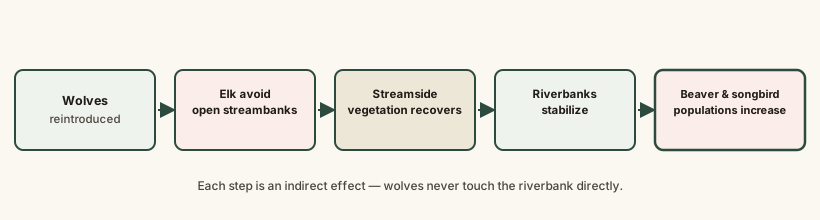
Each arrow represents an indirect ecological effect, not a direct interaction — wolves never touch the riverbank, but their presence changes elk behavior enough to reshape it within a few steps.
Common mistakes
Common Mistakes
Assuming rewilding means simply releasing a species and walking away with no further management.
→ Recognize most real rewilding projects involve careful planning, monitoring, and sometimes active intervention — the goal is restoring processes, not eliminating management entirely.
Assuming every reintroduction produces a dramatic trophic cascade like Yellowstone's wolves.
→ Understand cascade strength varies by ecosystem and species — some rewilding successes work through direct habitat engineering (like beavers) rather than predator-driven behavioral cascades.
Treating rewilding as risk-free.
→ Recognize reintroductions require real ecological assessment, since a reintroduced species can also create new human-wildlife conflict or unintended ecological effects if planned poorly.
Common misconception
“Rewilding is just 'doing nothing' and letting nature take its course.”
Rewilding is an active conservation strategy that typically requires careful species selection, reintroduction logistics, habitat preparation, and ongoing monitoring. The distinction from traditional wildlife management is in the goal — restoring self-regulating ecological processes rather than directly controlling every population number — not in the amount of planning or management effort involved.
What to do next
What to do next
- Look up whether your region has an active rewilding or reintroduction project — many are run with volunteer or citizen-science components.
- When you hear about a species reintroduction in the news, ask what ecological role that species plays, not just whether the population number is increasing.
- Read the wildlife-corridors entry in this cluster — corridors are often what make a reintroduced or expanding population viable long-term.
- Support conservation organizations that publish transparent ecological monitoring data on their rewilding projects, not just population headcounts.