 KnowThis
Key Takeaways
Key Takeaways
- 1Every OTC medicine sold in the US is required by the FDA to carry the same standardized 'Drug Facts' label, in the same fixed section order, regardless of brand or product type.
- 2The six standard sections are: Active ingredient(s), Purpose, Uses, Warnings, Directions, and Other information — reading them in that order answers 'what is it,' 'what's it for,' 'when shouldn't I take it,' and 'how much do I take' in sequence.
- 3The Warnings section is where drug-interaction risks, maximum duration, and 'stop use and ask a doctor' triggers live — it's the section most often skipped, and the one most worth reading fully.
The concept
Reading a label in the intended order — top to bottom, section by section — is faster and safer than skimming for just the dose, because the Warnings section often changes whether that dose even applies to you.
Which section of a standardized OTC Drug Facts label is specifically designed to tell you when you should NOT take the product, or when to stop and see a doctor?
Worked examples
Example 1: Reading a simple single-ingredient label top to bottom (baseline case)
Example 2: Spotting a hidden interaction risk in the Warnings section (edge case / variation)
Why does the standardized Drug Facts label place the Warnings section before the Directions section?
Example 3: Using the label format to compare two products quickly (real-world / applied case)
How it works (visual)
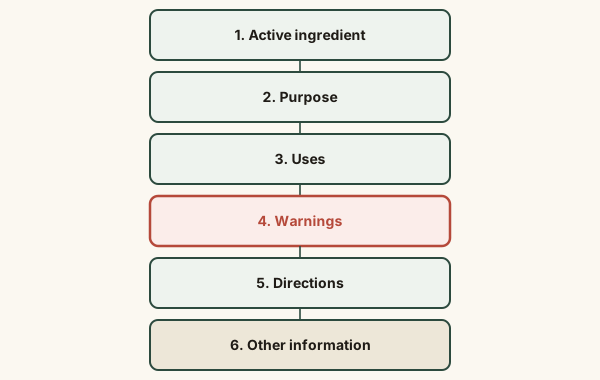
This exact order and these exact section names appear on every OTC medicine sold in the US, which is what makes the format learnable once and reusable on any product afterward.
Common mistakes
Common Mistakes
Skipping straight to the Directions section for the dose without reading Warnings first.
→ Read Warnings before Directions every time — that's the section that determines whether the dose even applies safely to your situation.
Assuming 'natural' or 'inactive' ingredients never matter.
→ Check inactive ingredients if you have a known allergy or sensitivity (like to certain dyes) — they're listed precisely because they can matter to some people.
Not checking the label again on a repeat purchase, assuming the formula hasn't changed.
→ Manufacturers can reformulate products over time — it takes seconds to re-check the Active ingredient line even on a familiar product.
Common misconception
“OTC medicine labels are inconsistent and hard to compare, so it's not worth trying to read them systematically.”
The opposite is true by design: the FDA mandates the exact same standardized Drug Facts section order — Active ingredient, Purpose, Uses, Warnings, Directions, Other information — on every OTC product sold in the US. Learning this one fixed structure means any OTC label, regardless of brand, can be read the same reliable way every time.
Why can two completely different-looking OTC product boxes both be read the exact same way?
What to do next
What to do next
- Read a Drug Facts label in its intended order — Active ingredient, Purpose, Uses, Warnings, Directions, Other information — rather than jumping straight to the dose.
- Give the Warnings section your full attention every time, especially if you take other medications.
- Re-check the Active ingredient line even on a familiar product, since formulations can change.
- Ask a pharmacist if any Warning or Direction is unclear before taking the product.