Understanding Notarization: What a Notary Actually Does
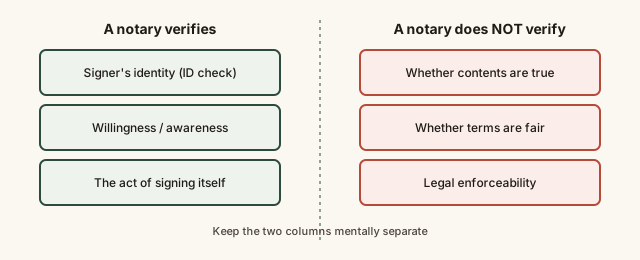
Notarization is a process in which a state-commissioned notary public verifies the identity of a document's signer and witnesses the signing, adding a layer of fraud-deterrence to the document — it does not verify the truth, fairness, or legal validity of the document's contents, which is a common and consequential misunderstanding.
Reading time
— 4 min
Updated
— Aug 26, 2026
Fact-reviewed
— Aug 26, 2026
Key Takeaways
Key Takeaways
1A notary's job is narrow and mechanical: verify the signer's identity and witness the signing — not evaluate whether the document's contents are true, fair, or legally sound.
2Notaries are commissioned by individual states, and specific rules (which documents can be notarized, what ID is acceptable, whether remote online notarization is allowed) vary by state.
3Notarization deters fraud by creating an identity-verified, documented record of who actually signed something and when — that record, not the document's substance, is what a notary is legally responsible for.
The concept
A notary public checks your ID, watches you sign a document, and stamps it to certify that this specific person actually signed it, in the notary's presence. That's the whole job. A notary is not a lawyer reviewing whether the document is a good idea, fair, or even legal — they're strictly a witness to identity and signature, which is a much narrower role than most people assume.
The most consequential misunderstanding about notarization is treating the notary's stamp as some kind of legal seal of approval on the document's contents, when it's really only a certified statement about who signed it.
Quick check
If a notary notarizes a contract that later turns out to contain an unenforceable clause, does that mean the notary made a mistake?
Worked examples
Example 1: Notarizing a power of attorney document (baseline case)
Someone needs a power of attorney document notarized before it will be accepted by a bank or government agency. They bring valid photo ID, sign the document in the notary's physical presence, and the notary applies their seal after confirming identity and willingness — a routine, mechanical process that adds a fraud-deterrent identity record without the notary evaluating whether granting that power of attorney is itself a good decision.
Example 2: Remote online notarization across state lines (edge case / variation)
Someone needs a document notarized but can't meet a notary in person, and their state permits remote online notarization via a video call with identity verification technology. Whether the resulting notarization is accepted, though, can depend on the specific receiving institution's own policies and whether the relevant states involved legally recognize remote online notarization — making it important to confirm acceptance with the receiving party before relying on this option for something time-sensitive.
Quick check
Is remote online notarization legally recognized and accepted identically in every U.S. state and by every institution?
Example 3: A notary refusing to notarize a document (real-world / applied case)
A notary declines to notarize a document because the signer can't produce acceptable ID, or appears confused, pressured, or unwilling. This refusal is a correct, expected exercise of the notary's actual responsibility — verifying identity and voluntary intent — rather than an overreach, since proceeding without confidence in either would undermine the entire fraud-deterrence purpose of notarization.
How it works (visual)
What notarization does and doesn't cover
Keeping these two columns mentally separate is the single most useful thing to take away from how notarization actually works.
Common mistakes
Common Mistakes
✕
Assuming a notarized document is automatically legally valid or enforceable.
→ Understand that notarization certifies signer identity and witnessing only — legal validity depends on the document's content and applicable law, entirely separate questions.
✕
Signing a document before arriving at the notary appointment.
→ Sign only in the notary's physical (or, where permitted, live video) presence, since the notary must witness the actual signing to notarize it.
✕
Assuming remote online notarization is accepted everywhere without checking first.
→ Confirm with the specific receiving institution and check applicable state law before relying on remote online notarization for something important or time-sensitive.
Common misconception
“A notary's stamp means a legal professional has reviewed and approved the document.”
A notary is not required to be a lawyer and generally does not review a document's legal content at all. The stamp certifies that a specific, identity-verified person signed the document in the notary's presence — nothing about the document's fairness, accuracy, or enforceability.
What to do next
What to do next
Bring acceptable, current government-issued photo ID to any notary appointment.
Sign the document in the notary's presence rather than beforehand.
If considering remote online notarization, confirm acceptance with the receiving institution first.
Don't assume notarization means a document is legally sound — consult a licensed attorney for questions about the document's actual content or effect.
FAQ
FAQ
Related terms
Related terms
Notary public
A person commissioned by a state government to serve as an impartial witness for the signing of important documents, primarily by verifying the identity of signers — not by evaluating the document's content or legal effect.
Notarization
The process by which a notary public verifies a signer's identity, confirms the signer appears willing and aware, and witnesses the signing, then applies an official seal or stamp certifying that this process occurred.
Notary journal
An official log many states require notaries to keep of each notarization performed, including signer identification details, used as evidence if a notarization is later questioned or challenged.
This entry was researched from public sources and drafted with AI-assisted tools, then edited — errors are still possible. Spot one, or want a topic covered? Read our disclaimer.
 KnowThis