 KnowThis
Key Takeaways
Key Takeaways
- 1Losing an ID document is both a replacement problem (getting a new document) and a security problem (the lost document could potentially be misused before you replace it).
- 2Different documents have different replacement processes and issuing authorities — a lost driver's license, Social Security card, and passport each require contacting a different specific agency.
- 3A fraud alert or credit freeze is a free, real protective step that can be taken quickly, separate from and in addition to the document replacement process itself.
The concept
The core mental model worth keeping is that "replace the document" and "protect against misuse of the lost one" are two different tasks running on two different timelines — the replacement can take days or weeks, but the protective fraud alert or freeze can typically be set up the same day.
If someone places a fraud alert with one credit bureau after losing their wallet, does it also protect them at the other two major bureaus?
Worked examples
Example 1: A lost wallet with a driver's license (baseline case)
Example 2: A passport lost while traveling internationally (edge case / variation)
Which category of lost identity document generally carries the highest identity-theft risk?
Example 3: Suspecting a lost Social Security card was used for fraud (real-world / applied case)
How it works (visual)
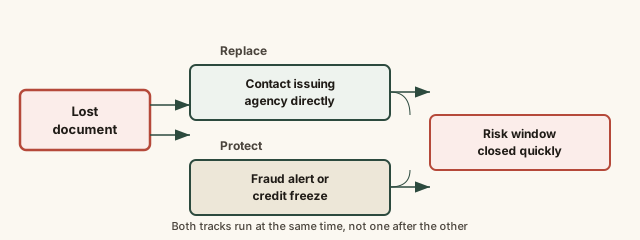
Running both tracks at the same time, rather than waiting for the replacement to finish before thinking about protection, is what actually closes the risk window quickly.
Common mistakes
Common Mistakes
Only focusing on getting a replacement document without considering identity-theft protection for the lost one.
→ Treat replacement and protection (fraud alert or credit freeze) as two separate, both-necessary steps, especially for higher-risk documents like a Social Security card or birth certificate.
Waiting to deal with a lost passport until returning home from a trip abroad.
→ Contact the nearest embassy or consulate immediately while still abroad, since it can issue emergency travel documents needed for re-entry.
Assuming a fraud alert requires separately contacting all three credit bureaus.
→ Contact just one of the three major bureaus — by law, it's required to notify the other two.
Common misconception
“Losing a driver's license or Social Security card isn't a big deal as long as you eventually get a replacement.”
Even a temporary gap between losing a document and replacing it creates a real window where someone else could potentially use the lost document to attempt identity theft. Protective steps like a fraud alert exist specifically to close that window quickly, independent of how long the replacement process itself takes.
What to do next
What to do next
- Identify the specific issuing agency for the lost document (state DMV, Social Security Administration, Department of State) and start the replacement process there directly.
- If the lost document is a higher-risk type (Social Security card, birth certificate), place a fraud alert with one of the three major credit bureaus right away.
- If a passport is lost abroad, contact the nearest embassy or consulate immediately rather than waiting until returning home.
- If you suspect the lost document has already been misused, file a report through the FTC's official identity theft reporting resource.