 KnowThis
Key Takeaways
Key Takeaways
- 1A statute of limitations is a filing deadline for a specific type of legal claim, and once it passes, the claim is typically barred entirely — merit alone does not revive an expired claim.
- 2The length of the period varies dramatically by both claim type (a contract dispute versus a personal injury versus fraud, for example) and jurisdiction — there is no single universal number.
- 3Certain circumstances can pause or extend the clock (called tolling), such as when the affected person was a minor at the time or the wrongdoing was actively concealed — but whether tolling applies is a case-specific legal question.
The concept
A few concrete scenarios show how the same general concept plays out very differently depending on the type of claim and when the clock is considered to have started.
What generally happens if someone tries to file a lawsuit after the applicable statute of limitations has expired?
Worked examples
Example 1: A straightforward contract dispute (baseline case)
Example 2: A discovery-rule scenario (edge case / variation)
Example 3: Two different claim types with different deadlines from the same event (real-world / applied case)
Why might two different types of legal claims arising from the exact same incident have different filing deadlines?
How it works (visual)
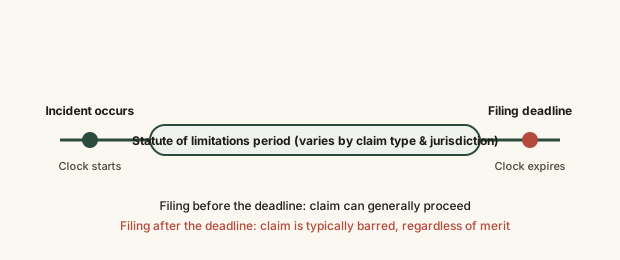
The visual is deliberately simple, because the underlying rule is simple — the complexity lives entirely in figuring out which period applies and when the clock actually started, which is exactly the kind of question a licensed attorney is positioned to answer for a specific situation.
Common mistakes
Common Mistakes
Assuming a single, universal statute of limitations applies to every type of legal claim.
→ Recognize that the applicable period depends on both the type of claim and the jurisdiction — look up the specific rule for your specific situation, or consult an attorney.
Delaying legal action because a deadline still "feels far away."
→ Treat statute of limitations research as an early priority in any potential legal matter, since gathering evidence and legal advice also takes time before a filing deadline arrives.
Assuming a claim is automatically preserved just because the wrongdoing was hard to detect.
→ Understand that tolling or discovery-rule exceptions are specific legal doctrines that must actually apply and often must be argued — they aren't automatic just because harm was hard to notice.
Common misconception
“If your case is strong enough, a court will hear it no matter how much time has passed.”
A statute of limitations is a procedural deadline, not a measure of a claim's strength — courts can and do dismiss even factually strong claims solely because they were filed after the applicable deadline. Missing the deadline is often fatal to a claim regardless of its underlying merits.
Try it yourself
A simplified illustration of how many years remain if a given statute-of-limitations period is measured from a past incident. This is not a real deadline for any specific claim.
This is a simplified illustration only, not a legal determination of any real filing deadline. Actual statutes of limitations vary by claim type and jurisdiction, and can be paused or extended by tolling rules that this calculator does not account for. Consult a licensed attorney to determine an actual deadline.
What to do next
What to do next
- If you believe you may have a legal claim, research the applicable statute of limitations for that specific claim type and jurisdiction as early as possible.
- Keep dated records of when you first learned of any potential harm, since the discovery date can matter for certain claim types.
- Don't assume you have more time than you actually do — deadlines for claims against government entities, in particular, can be unusually short.
- Consult a licensed attorney promptly if a potential deadline may be approaching, since attorneys can identify the correct period and any tolling arguments that might apply.