 KnowThis
Key Takeaways
Key Takeaways
- 1Three general factors tend to signal that a situation calls for a lawyer: high financial or personal stakes, real legal complexity, and low reversibility if something goes wrong.
- 2Low-stakes, simple, reversible situations — like many small claims cases or reading a standard lease — are often manageable without a lawyer, especially with the help of official self-help court resources.
- 3This framing is general guidance, not a rule for any specific situation — when in doubt, a low-cost initial consultation with a licensed attorney can itself help answer whether more help is needed.
The concept
Applying the three-factor lens to a few concrete situations shows how the same general framework produces different answers depending on the specifics.
Which three general factors help signal whether a situation calls for a lawyer?
Worked examples
Example 1: A small claims dispute over a security deposit (baseline case)
Example 2: A seemingly simple document with high reversibility risk (edge case / variation)
Example 3: A multi-party business contract dispute (real-world / applied case)
Why might a short, simple-looking document still call for a lawyer's review?
How it works (visual)
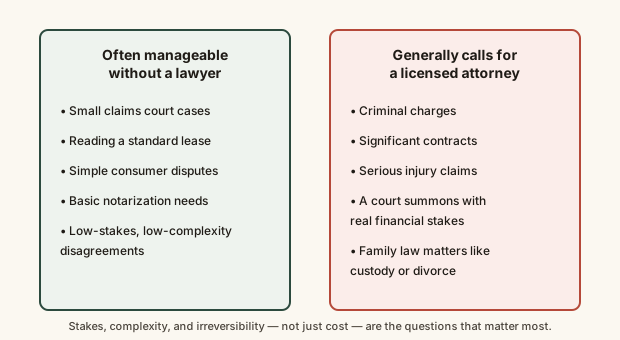
This is a general starting map, not an exhaustive or authoritative list — any specific situation can shift toward the "get a lawyer" side depending on its own particular stakes, complexity, and reversibility.
Common mistakes
Common Mistakes
Assuming cost alone should decide whether to hire a lawyer, without weighing stakes or reversibility.
→ Weigh what's actually at risk and how hard a mistake would be to undo, not just the upfront cost of legal help.
Signing a legal document under time pressure without understanding what rights it affects.
→ Ask for time to review any significant document, and get a professional read on anything that waives rights or has long-term consequences.
Assuming any legal question requires a full, expensive attorney engagement.
→ Consider a single paid consultation first — many attorneys offer this specifically to help someone figure out how much help they actually need.
Common misconception
“Hiring a lawyer always means an expensive, long-term commitment.”
Many attorneys offer a limited-scope engagement — such as a single consultation, document review, or one specific filing — rather than full representation, which can make professional legal help far more accessible for a narrowly defined need.
What to do next
What to do next
- Ask yourself the three questions — stakes, complexity, reversibility — before deciding whether to proceed without a lawyer.
- Check whether your court or jurisdiction has official self-help resources for your specific situation (common for small claims and standard filings).
- Consider a single paid consultation with a licensed attorney if you're unsure, rather than assuming full representation is the only option.
- Never sign a document that waives legal rights or has long-term consequences without understanding it fully, ideally with professional review.