 KnowThis
Key Takeaways
Key Takeaways
- 1Legal aid organizations provide free or low-cost legal help, generally to people who meet income and case-type eligibility requirements set by the specific organization or funding source.
- 2Pro bono means attorneys volunteering their time for free, often coordinated through bar associations, law firms' own pro bono programs, or legal aid organizations themselves.
- 3Both resources have real capacity limits — not every case type is covered, not every income level qualifies, and demand often exceeds available volunteer and staff attorney time.
The concept
Looking at how eligibility and case-type limits actually play out clarifies why "free legal help" isn't a single universal program, but a patchwork of organizations each with their own specific focus.
What generally determines whether someone is eligible for legal aid?
Worked examples
Example 1: A tenant facing eviction seeks legal aid (baseline case)
Example 2: A case type that falls outside a legal aid group's focus (edge case / variation)
Example 3: A law firm's dedicated pro bono program (real-world / applied case)
Why might someone with a qualifying low income still be turned away from a specific legal aid organization?
How it works (visual)
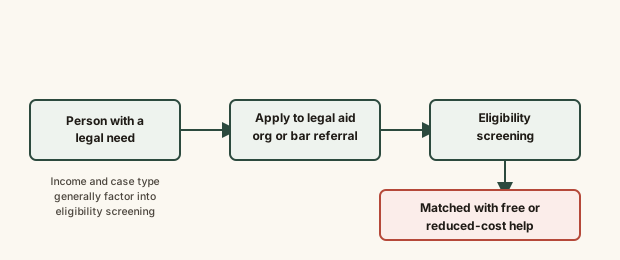
The screening step is where income and case-type criteria actually get applied, which is why two people with similar-sounding legal problems can have very different outcomes from the same organization.
Common mistakes
Common Mistakes
Assuming legal aid covers any type of legal problem for anyone with a low income.
→ Check the specific case types a legal aid organization actually covers before assuming your situation qualifies.
Giving up after one legal aid organization declines a case, without trying a bar association referral service.
→ Contact your local or state bar association's pro bono referral program as an additional avenue if a legal aid group can't take your case.
Waiting too long to seek legal aid help, assuming there's no urgency.
→ Apply as early as possible, since legal aid organizations often have waitlists and case deadlines (like statutes of limitations or eviction response windows) don't pause while you wait.
Common misconception
“Legal aid and pro bono services only exist for criminal defense.”
Criminal defense has its own separate system (public defenders, appointed by courts for those who qualify), while legal aid and pro bono programs primarily focus on civil matters — commonly housing, family law, domestic violence protection, benefits, and consumer issues.
What to do next
What to do next
- Search for local legal aid organizations and check their specific income and case-type eligibility criteria before applying.
- Contact your state or local bar association's pro bono referral service if a legal aid organization can't take your case.
- Apply as early as possible, especially if any deadline (like a court response date or statute of limitations) is approaching.
- Ask whether a nearby law school operates a legal clinic that might cover your specific case type.