 KnowThis
Key Takeaways
Key Takeaways
- 1Most legal notices share a common structure: sender and recipient identification, a statement of the issue, a required action, and a response deadline.
- 2The response deadline is generally the single most important piece of information in a legal notice — missing it can foreclose options that would otherwise be available.
- 3Not every letter labeled "legal notice" or "final notice" carries the same legal weight — an official court summons or debt collection notice carries specific formal consequences, while some correspondence is simply a firmly worded letter.
The concept
Walking through how the same general structure applies to a few different real notice types shows why locating each part carefully, rather than skimming, matters.
What is generally the most important single piece of information to locate in a legal notice?
Worked examples
Example 1: Reading a debt collection notice (baseline case)
Example 2: A notice that looks official but is actually a scam attempt (edge case / variation)
Example 3: A properly served court summons (real-world / applied case)
Why might it matter to distinguish a formally served court summons from a forcefully worded collection letter?
How it works (visual)
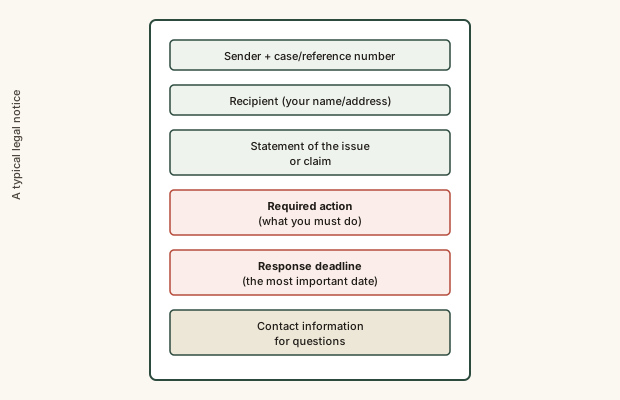
Once the parts are labeled, scanning any new notice for these same sections becomes a repeatable habit rather than a fresh puzzle each time.
Common mistakes
Common Mistakes
Setting a legal notice aside unread because it looks intimidating or bureaucratic.
→ Open and read any legal notice promptly — the deadline inside it starts running whether or not you've read it.
Assuming a notice is a scam (or assuming it's genuine) without verifying it.
→ Verify unexpected notices independently — for example, by looking up a stated case number directly with the court, rather than trusting contact information printed on the notice itself.
Responding to the wrong requirement in a notice, such as sending payment when a written dispute was actually required.
→ Read the required action section carefully and match your response exactly to what's actually requested.
Common misconception
“Any letter that calls itself a final notice or legal notice automatically carries the force of a court order.”
The label a document gives itself doesn't determine its legal weight — a formally served court summons or an official government notice carries specific procedural consequences, while some correspondence simply uses forceful language without being a formal legal filing at all.
What to do next
What to do next
- Locate the response deadline first, and mark it clearly — this is usually the most time-sensitive detail.
- Identify the sender and any case or reference number, and verify legitimacy independently if anything seems off.
- Read the required action carefully, and make sure your response actually matches what's being asked.
- Consult a licensed attorney or legal aid organization promptly if the notice involves a court filing, eviction, or other high-stakes matter.