 KnowThis
Key Takeaways
Key Takeaways
- 1A court summons is a formal legal document notifying someone of a lawsuit or legal proceeding, and it sets a specific, binding deadline to respond or appear.
- 2Failing to respond by the deadline can result in a default judgment against the recipient, decided without their side of the case ever being presented — ignoring a summons does not make the case go away.
- 3This is general process literacy, not legal advice for a specific case — anyone served with a summons should consult a licensed attorney or a legal aid organization promptly, given the strict deadlines involved.
The concept
The single most important fact about a summons is that the deadline is real and generally strict — treating it as something to deal with later, once other things settle down, is the most common and most damaging mistake people make with one.
Someone receives a court summons and, believing the lawsuit is baseless, decides not to respond at all. What is the most likely consequence?
Worked examples
Example 1: Responding to a straightforward civil summons (baseline case)
Example 2: A summons for a case the recipient believes doesn't apply to them (edge case / variation)
Example 3: A default judgment after a missed deadline (real-world / applied case)
Someone believes a summons they received is fraudulent or a scam. What is a reasonable first step?
How it works (visual)
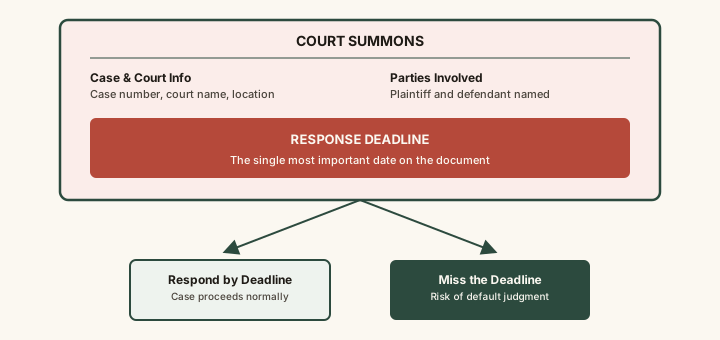
Every part of a summons feeds into that single deadline — the parties, the case number, and the court name all exist to make clear who must respond, to what, and by when, which is why locating the deadline first is generally the right way to approach reading one.
Common mistakes
Common Mistakes
Ignoring a summons because the underlying claim seems baseless, mistaken, or unlikely to hold up.
→ Respond by the deadline regardless of how strong the case against you seems — a default judgment can be entered without evaluating the merits of a non-responding party's position.
Delaying a response while deciding whether to hire an attorney.
→ Contact an attorney or a legal aid organization as soon as possible after being served, since the response window is often short and doesn't pause for the decision-making process.
Assuming a summons that seems suspicious must be fraudulent and can be safely discarded.
→ Verify a suspicious-looking summons directly with the named court using independently found contact information, rather than assuming it's fake or assuming it's genuine without checking.
Common misconception
“Ignoring a court summons makes the underlying legal problem go away, especially if the claim seems unfounded.”
Ignoring a summons generally does not make a case disappear — it typically allows the opposing party to request a default judgment, which can be granted without the non-responding party's side of the case ever being heard, regardless of how strong or weak the underlying claim actually was. Responding by the stated deadline preserves the ability to contest a case; missing it generally forfeits that opportunity.
What to do next
What to do next
- If served with a summons, identify the response deadline immediately — it's typically one of the first things stated on the document.
- Contact a licensed attorney or a local legal aid organization as soon as possible, given how short response windows often are.
- If a summons seems suspicious, verify it directly with the named court using independently found contact information before deciding whether to respond.
- Keep a copy of the summons and any response filed, along with proof of when and how it was submitted.