 KnowThis
Key Takeaways
Key Takeaways
- 1A permit generally authorizes a specific, often time-limited action or project; a license generally authorizes an ongoing activity, like practicing a profession or operating a business.
- 2Different levels of government (local, state, federal) and different regulatory bodies issue different categories of permits and licenses, which is why a single project or business can require several at once.
- 3This is general documentation literacy, not a substitute for checking your specific local and state requirements — permit and license requirements vary significantly by location and activity.
The concept
The permit-versus-license distinction is useful mainly as a starting mental model — in practice, confirming the actual requirements for a specific project or business with the relevant local and state authorities is the only reliable way to know what's needed.
A homeowner wants to add a room to their house. Which type of authorization does this most likely require, and why?
Worked examples
Example 1: A single home renovation permit (baseline case)
Example 2: A profession requiring an ongoing license (edge case / variation)
Example 3: A business needing multiple overlapping authorizations (real-world / applied case)
Why might a single new business need authorizations from multiple different government authorities at once?
How it works (visual)
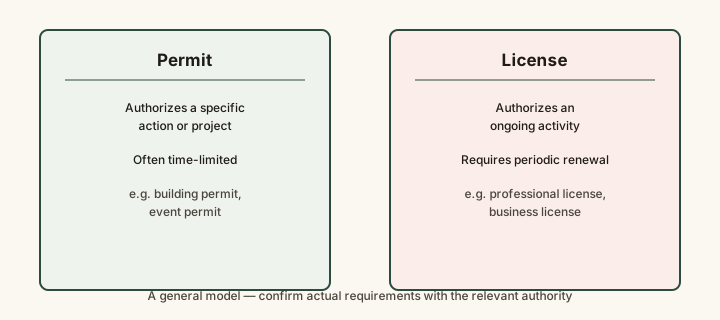
The comparison is a starting mental model, not a legal test — some jurisdictions use the terms loosely or interchangeably in their own official naming, so the actual requirements for a specific activity matter more than which word a form happens to use.
Common mistakes
Common Mistakes
Assuming a single permit or license covers every aspect of a project or business.
→ Check with each relevant local, county, and state authority separately, since different aspects of the same project or business often fall under different jurisdictions.
Letting a license lapse by missing a renewal deadline, assuming the original approval doesn't expire.
→ Track renewal deadlines for any ongoing license actively, since most licenses require periodic renewal and continued compliance, not a one-time approval.
Starting a project or business activity before confirming which permits or licenses actually apply.
→ Confirm requirements with the relevant building department, business licensing office, or industry regulator before starting, since retroactive compliance is often more costly and disruptive than a delay upfront.
Common misconception
“Permits and licenses are just two words for the same kind of government paperwork.”
While the terms are sometimes used loosely, they generally serve different functions: a permit typically authorizes a specific, often time-limited action or project, while a license typically authorizes an ongoing activity requiring periodic renewal. Knowing which type of authorization a given activity actually needs — and confirming it directly with the relevant authority — matters more than assuming based on the term alone.
What to do next
What to do next
- Before starting a project or business activity, list every local, county, state, and (if applicable) federal authority that might have jurisdiction over it.
- Check each authority's specific permit and license requirements directly rather than assuming based on similar past projects or businesses.
- For any ongoing license, track its renewal deadline and continuing compliance requirements actively.
- Keep copies of every permit and license obtained, along with their expiration or renewal dates, in a single accessible place.