 KnowThis
Key Takeaways
Key Takeaways
- 1Tax filing documents split into two distinct roles: information returns (like a W-2 or 1099) that report income to you, and the tax return itself (like Form 1040) that you file using that information.
- 2Schedules are add-on forms attached to a base return to report specific situations — self-employment income, itemized deductions, additional credits — that the base return alone doesn't have room to cover.
- 3This is general document literacy, not personalized tax advice — for a specific filing question, a licensed tax professional or the IRS directly is the appropriate resource, not a general reference article.
The concept
Understanding which document plays which role is most of what's needed to approach a filing season without confusion — the rest is largely a matter of gathering every information return that applies before starting the return itself.
What is the key functional difference between a W-2 and a Form 1040?
Worked examples
Example 1: A single-employer filer (baseline case)
Example 2: A filer with both a W-2 job and freelance income (edge case / variation)
Example 3: A mismatch between reported income and a received notice (real-world / applied case)
Why might the IRS send a notice about income a filer didn't think they needed to report?
How it works (visual)
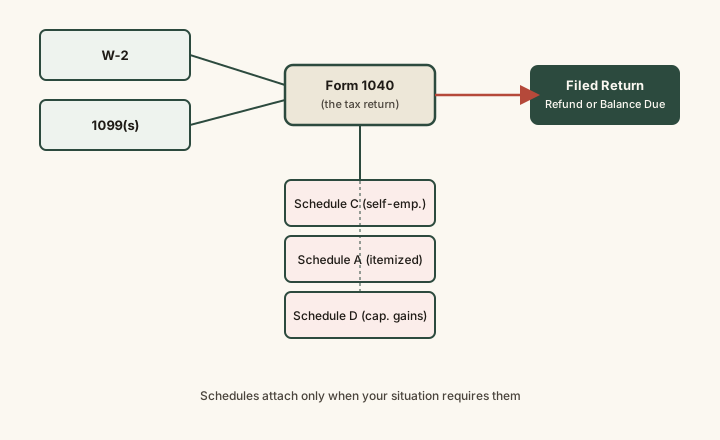
Every arrow into the 1040 represents a real document that has to be gathered before the return can be completed accurately — missing even one information return is the most common reason a completed return later needs to be corrected.
Common mistakes
Common Mistakes
Starting a tax return before every information return for the year has actually arrived.
→ Wait until all expected W-2s and 1099s have arrived (or check with each payer directly) before completing the return, since a missing one is a common cause of having to file an amended return later.
Assuming a 1099 not received means the income doesn't need to be reported.
→ Report all taxable income regardless of whether an information return was received — payers below certain reporting thresholds aren't always required to issue one, but the income itself is generally still taxable.
Treating a schedule as optional paperwork rather than a required part of the return for a given situation.
→ Check whether your specific situation (self-employment, itemized deductions, investment income) requires an attached schedule — omitting a required schedule can make a return incomplete even if the main form looks finished.
Common misconception
“If you don't receive a 1099 for a particular payment, that income doesn't need to be reported on your tax return.”
Reporting thresholds determine when a payer is required to issue a 1099, not whether the income itself is taxable — income below a reporting threshold is generally still taxable and still needs to be reported by the recipient, even without a 1099 in hand. This is general filing literacy, not personalized tax advice for any specific situation.
What to do next
What to do next
- Make a list of every expected information return (W-2s, 1099s, and any others) before starting your return, and confirm each one has actually arrived.
- Identify whether your situation requires any additional schedules — self-employment income, itemized deductions, or investment income are the most common triggers.
- Keep copies of every information return and completed return for several years, since they may be needed for future reference or in case of a notice.
- For any specific filing question tied to your own situation, consult a licensed tax professional or IRS.gov directly rather than relying on general literacy content like this.