 KnowThis
Key Takeaways
Key Takeaways
- 1A FOIA request is a formal, legally grounded document request to a U.S. federal agency, available to any person, not just journalists or specialists.
- 2Agencies must respond within a legally defined timeframe and can only withhold information under specific statutory exemptions, not at broad discretion.
- 3This is general process literacy, not legal advice for a specific request — for a denied request or a complex situation, consulting FOIA.gov's guidance or a records-access attorney is the appropriate next step.
The concept
The core idea — that government records are presumptively accessible to the public, with narrow, specific exceptions — is what distinguishes a FOIA request from simply asking an agency informally for information.
Can a private individual, with no journalism background or legal representation, submit a valid FOIA request?
Worked examples
Example 1: A straightforward request for an inspection report (baseline case)
Example 2: A request partially denied under an exemption (edge case / variation)
Example 3: Appealing a denied request (real-world / applied case)
An agency denies a FOIA request but doesn't cite any specific exemption for doing so. What does this suggest?
How it works (visual)
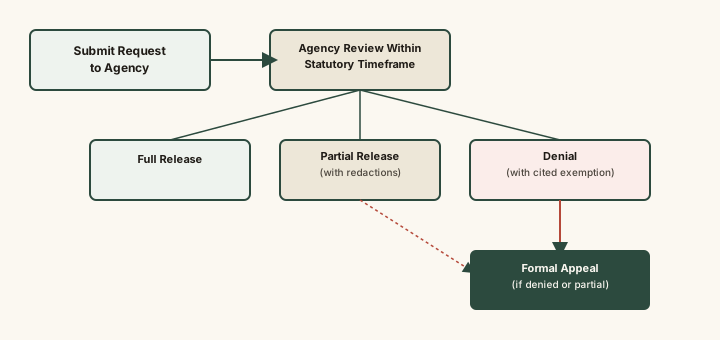
The appeal step exists precisely because an initial denial or partial release isn't the end of the process — it's a defined, expected branch in the overall flow, not an exceptional escalation.
Common mistakes
Common Mistakes
Submitting a vague request without enough detail for the agency to locate the specific records.
→ Describe the records as specifically as possible — subject matter, relevant date range, and any known document titles or reference numbers — to speed up processing.
Treating a state public records request the same as a federal FOIA request.
→ Check the specific state's public records law, since timelines, exemptions, and procedures can differ from the federal FOIA process even though the underlying concept is similar.
Assuming a denial is final without checking whether a formal appeal is available.
→ Review the denial letter for appeal instructions — most FOIA denials include a formal administrative appeals process before resorting to federal court.
Common misconception
“FOIA requests are only for journalists, researchers, or people with a specific legal case.”
FOIA is available to any person for essentially any reason — the law doesn't require a stated purpose, a professional affiliation, or U.S. citizenship in most cases. The presumption underlying FOIA is that federal records are accessible to the public generally, with withholding limited to specific, narrowly defined statutory exemptions rather than broad agency discretion.
What to do next
What to do next
- Identify the specific federal agency (or, for state/local records, the relevant state or local body) most likely to hold the records you want.
- Check that agency's FOIA (or public records) portal for its specific submission process and any online request form.
- Describe the records requested as specifically as possible — subject, date range, and any known identifiers — to speed up processing.
- If a request is denied or only partially fulfilled, review the response for a cited exemption and check whether a formal appeal is available before assuming the denial is final.