 KnowThis
Key Takeaways
Key Takeaways
- 1A civil lawsuit generally moves through the same broad stages: filing a complaint, the defendant's response, a discovery phase, pretrial motions, and then resolution by settlement or trial.
- 2The overwhelming majority of civil cases settle or otherwise resolve before ever reaching a trial — a full trial is the exception, not the norm.
- 3The exact rules, deadlines, and terminology vary by court system and jurisdiction, so this is a general map of the process, not a substitute for guidance from a licensed attorney handling a specific case.
The concept
Looking at a few concrete scenarios makes the abstract stages easier to picture, and highlights just how much of the process happens before anyone sets foot in a courtroom.
What happens during the discovery phase of a civil lawsuit?
Worked examples
Example 1: A contract dispute that settles during discovery (baseline case)
Example 2: A case dismissed on a pretrial motion (edge case / variation)
Example 3: A case that goes all the way to trial and judgment (real-world / applied case)
Why do most civil lawsuits settle before trial rather than going all the way through the process?
How it works (visual)
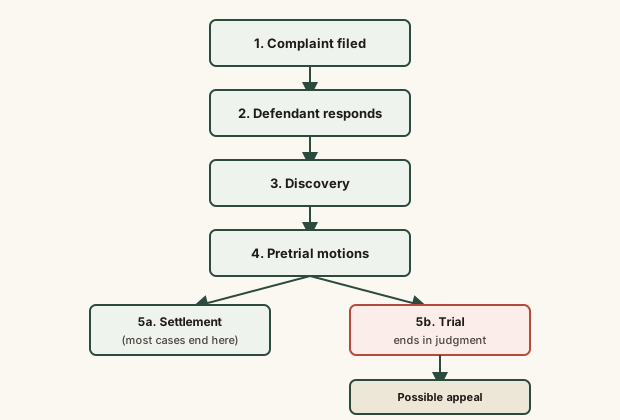
Most cases exit the flow at the settlement branch — trial is the path taken by a minority of filed lawsuits, not the default ending.
Common mistakes
Common Mistakes
Assuming every lawsuit ends in a dramatic courtroom trial, based on TV or film portrayals.
→ Recognize that most civil cases resolve through settlement, dismissal, or other pretrial mechanisms — a full trial is comparatively rare.
Ignoring or ineffectively responding to a formally served complaint, assuming it will simply go away.
→ Respond to any properly served complaint by the stated deadline — failing to respond can result in a default judgment against you.
Underestimating how long and document-intensive the discovery phase can be.
→ Expect discovery to be the most time-consuming part of most lawsuits, and keep organized records of anything potentially relevant to the dispute.
Common misconception
“If you ignore a lawsuit filed against you, the court will eventually just drop the case.”
Failing to respond to a properly served complaint by the required deadline typically allows the plaintiff to request a default judgment — a ruling in their favor without any hearing on the merits — which can be difficult to reverse. Ignoring a lawsuit does not make it disappear.
What to do next
What to do next
- If you're served with a complaint, note the response deadline immediately — missing it can result in a default judgment.
- Keep organized records of any documents, communications, or evidence relevant to a potential dispute, since discovery will likely require them.
- Ask whether mediation or another settlement discussion is realistic before committing to the time and cost of a full lawsuit.
- Consult a licensed attorney early in the process — the stages described here are a general map, not a substitute for case-specific legal guidance.