 KnowThis
Key Takeaways
Key Takeaways
- 1An ATM withdrawal is a real-time message exchange — the machine asks your bank to authorize a specific amount, and only dispenses cash after your bank confirms sufficient available balance.
- 2Whether a fee applies depends on ATM network membership, not physical ownership — a machine owned by a different bank can still be fee-free if it's part of a shared or partner network your own bank belongs to.
- 3The cash inside an ATM belongs to whoever owns or services the machine, not your bank — your bank is only authorizing the transaction and later settling the transferred funds with the machine's owner.
The concept
Understanding that ownership and network membership are two different things is what actually explains why some "other bank" ATMs are free and others aren't.
A cardholder uses an ATM owned by a bank they don't have an account with, and no fee is charged. What's the most likely explanation?
Worked examples
Example 1: A standard in-network withdrawal (baseline case)
Example 2: A partner-network withdrawal with no fee (edge case / variation)
Example 3: An out-of-network withdrawal with a declined request (real-world / applied case)
If a withdrawal request is declined because of insufficient available balance, is the requester typically charged a fee for the attempt?
How it works (visual)
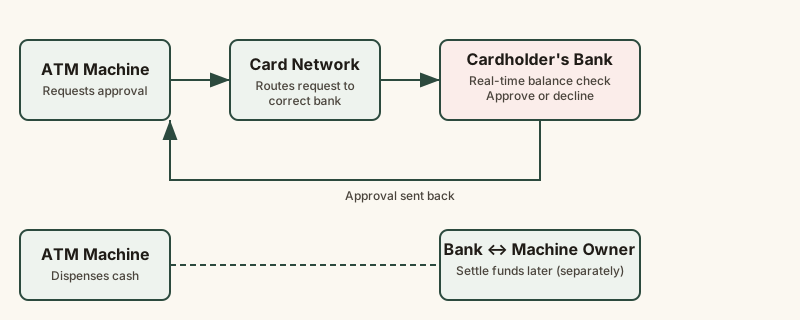
The round trip from request to dispensed cash happens in seconds, but the actual transfer of funds between the two institutions involved is a separate process that settles later — the instant approval you see is a promise to pay, not the payment itself.
Common mistakes
Common Mistakes
Assuming an ATM is free to use just because it doesn't display a fee warning on the outside of the machine.
→ Check with your own bank's ATM locator (app or website) before withdrawing away from home — network membership, not visible signage, is what actually determines the fee.
Assuming any ATM 'owned by a big bank' is automatically in-network for your card.
→ Network membership is specific to agreements between banks, not brand size — confirm using your bank's own network list rather than assuming based on the ATM owner's name.
Confusing 'available balance' with 'full account balance' when predicting whether a withdrawal will be approved.
→ Remember pending transactions can reduce available balance below the full balance shown — a withdrawal request checks the smaller, available number.
Common misconception
“ATMs dispense cash directly from your own bank account's physical reserves, so using any machine 'connected to the banking system' should always be free.”
An ATM dispenses cash that belongs to whoever owns or services that specific machine — your bank authorizes the transaction and settles the transferred funds with the machine's owner afterward, completely separately. Whether a fee applies is governed by network membership agreements between banks, not by some universal free connection to "the banking system" as a whole.
What to do next
What to do next
- Use your own bank's ATM locator app or website before withdrawing cash away from home to confirm network membership in advance.
- Check your bank's published list of partner/surcharge-free networks — many nationwide banks and credit unions belong to large shared networks you may not know about.
- If you're unsure whether an ATM is in-network, check the balance-inquiry screen first — most ATMs disclose any surcharge before you confirm the withdrawal.
- Keep in mind that a declined withdrawal (due to insufficient available balance) is different from a fee-bearing completed withdrawal — the two aren't the same event.