 KnowThis
Key Takeaways
Key Takeaways
- 1A sustainability checklist is only as useful as its ordering — ranking items by measured impact (energy, transportation, food) rather than by visibility (straws, bags) directs effort where it actually counts.
- 2Household energy use and transportation choices are consistently the largest personal-level emissions categories in EPA and Project Drawdown data, well ahead of single-use item swaps.
- 3A habit that's done consistently (like keeping a thermostat setting) usually beats an occasional dramatic action, because environmental impact compounds the same way a recurring cost or saving does.
The concept
Building a checklist that actually reflects this ordering means grouping habits by rough impact tier, not by how often each one shows up in a listicle.
A friend says their sustainability routine is centered on always using a reusable coffee cup and never buying bottled water. Based on typical emissions-accounting data, what would improve their overall personal impact more?
Worked examples
Example 1: Ordering a basic four-category checklist by impact tier (baseline case)
Example 2: Why a single big change can outweigh many small ones (edge case / variation)
Example 3: Applying impact-ordering inside a single category, not just across categories (real-world / applied case)
Within the 'transportation' category of a sustainability checklist, why might reducing one long-haul flight matter more than several months of short local car trips?
How it works (visual)
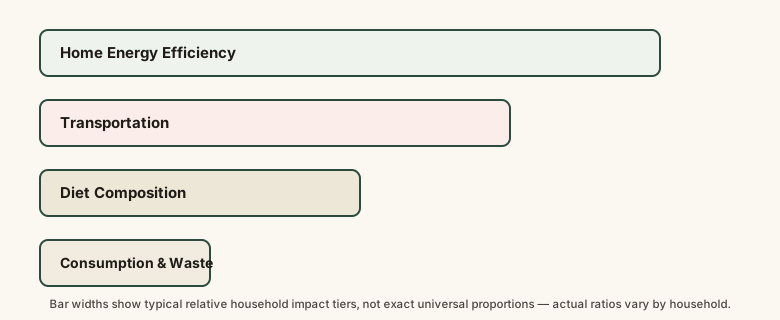
The decreasing bar widths represent typical relative scale, not a fixed universal ratio — the exact proportions vary by household, climate, and location — but the ordering (energy and transportation above single-item consumption choices) holds consistently across most published personal-footprint accounting.
Common mistakes
Common Mistakes
Building a checklist entirely from the most commonly discussed habits (recycling, reusable bags) without checking their relative measured impact.
→ Weight the checklist toward home energy, transportation, and diet first, using published EPA or Project Drawdown category rankings as a rough guide, then add smaller consumption habits on top.
Treating every item on a sustainability checklist as equally weighted.
→ Group items into rough impact tiers (large, medium, small) rather than a single flat list, so effort naturally gets directed toward the larger tiers first.
Abandoning a checklist entirely after failing to do the more dramatic, highest-effort items.
→ Keep the smaller, easier habits even while working toward bigger changes — a consistent smaller habit still compounds over time, and isn't in competition with pursuing a bigger one later.
Common misconception
“Since the smaller everyday swaps (bags, straws, bottles) don't move the needle much individually, they're not worth including on a sustainability checklist at all.”
Smaller habits are still net positive and worth keeping — the issue isn't that they don't matter, it's that a checklist should reflect their relative weight honestly rather than implying they carry the same impact as home-energy or transportation choices. A well-ordered checklist keeps both, sequenced by actual measured impact, rather than dropping the smaller items or overweighting them.
What to do next
What to do next
- Start your own checklist with the largest measured categories first — home heating/cooling efficiency and transportation choices — before adding smaller consumption habits.
- Use a published household carbon footprint estimator (like the EPA's) once, just to see which of your own categories are actually largest, rather than assuming based on which habits feel most visible.
- Keep smaller habits (reusable items, reduced packaging) on the list too — they're genuinely positive, just lower-tier — instead of treating the checklist as all-or-nothing.
- Revisit the checklist yearly, since a change in circumstances (a shorter commute, a more efficient appliance) can shift which category deserves the most attention next.