 KnowThis
Key Takeaways
Key Takeaways
- 1The decibel scale is logarithmic, not linear — a 10-decibel increase represents ten times more sound energy, even though it's perceived as only roughly twice as loud.
- 2Chronic exposure to sound above about 85 decibels, especially over years, is a well-documented cause of permanent noise-induced hearing loss — a level many workplaces and city streets regularly reach.
- 3Noise pollution is linked to health effects beyond hearing, including sleep disruption and elevated cardiovascular risk from chronic exposure, per WHO environmental noise guidelines.
The concept
Because the decibel scale compresses an enormous range of sound energy into manageable numbers, small-looking numeric differences on a decibel meter can represent very large real differences in exposure — which is exactly the kind of thing a logarithmic scale is built to do, but also exactly what makes it easy to underestimate.
A city street measures 70 dB, and a construction site nearby measures 90 dB. How much more sound energy does the construction site actually have, compared to the street?
Worked examples
Example 1: Comparing a library and a normal conversation (baseline case)
Example 2: A workplace noise limit in practice (edge case / variation)
Example 3: Chronic urban traffic noise (real-world / applied case)
How it works (visual)
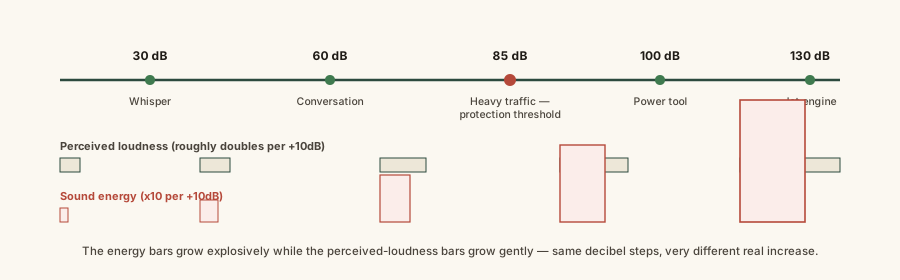
Reading the two rows together shows the core mismatch: the perceived-loudness row climbs gently, while the sound-energy row underneath it climbs explosively — the entire reason a "moderately louder" workplace or street can carry a dangerously large increase in actual sound energy.
Common mistakes
Common Mistakes
Treating decibel differences as linear (assuming 80 dB is 'twice' as much sound as 40 dB).
→ Remember each 10 dB step is a tenfold jump in sound energy — a 40 dB difference (like 40 to 80) represents 10,000 times more energy, not 2x.
Assuming only obviously loud, painful sounds cause hearing damage.
→ Chronic exposure to moderate levels (like 85 dB workplace noise) over years is a well-documented cause of permanent hearing loss, not just brief exposure to extremely loud sounds.
Treating noise pollution as only a hearing-related issue.
→ WHO environmental noise research links chronic exposure to sleep disruption and cardiovascular risk as well, independent of hearing damage.
Common misconception
“If a sound doesn't feel painfully loud or uncomfortable, it's not doing any real damage.”
Noise-induced hearing loss is typically cumulative and painless in the moment — sustained exposure to moderate levels like 85 dB over years causes measurable, permanent hearing damage without ever feeling acutely painful, which is exactly why occupational hearing protection standards are based on decibel level and exposure duration, not on subjective discomfort.
Why does WHO's environmental noise guidance address chronic moderate-level noise (like traffic), not just extremely loud one-time sounds?
What to do next
What to do next
- Use hearing protection around sustained sound sources at or above 85 dB (power tools, loud machinery, concerts), even if the sound doesn't feel painfully loud.
- Remember that a 'moderate' decibel increase represents a much larger jump in actual sound energy than it sounds like, when comparing environments or noise sources.
- If you live near chronic ambient noise (a busy road, airport flight path), be aware WHO research links this to sleep and cardiovascular effects, not just annoyance.
- Check workplace noise exposure guidance (like NIOSH's) if you work around sustained loud machinery — exposure limits are set based on both decibel level and duration together.