 KnowThis
Key Takeaways
Key Takeaways
- 1Light pollution isn't one problem — it includes skyglow (diffuse sky brightening), light trespass (spillover onto unintended areas), and glare, each with different causes and fixes.
- 2Human circadian rhythms rely on a clear light-dark cycle; artificial light exposure, especially at night, can disrupt sleep-related hormone timing.
- 3Many nocturnal species evolved navigational and behavioral cues around natural darkness — sea turtle hatchlings, migrating birds, and nocturnal insects are all documented to be disrupted by ecological light pollution.
The concept
Because much of light pollution comes from poorly shielded or unnecessarily bright fixtures rather than from lighting that's actually needed for safety or visibility, it's one of the few pollution categories where the fix is often as simple as redirecting or dimming existing infrastructure, not eliminating it.
A beachfront hotel installs bright, unshielded lighting facing the ocean. What specific wildlife problem is this most likely to cause?
Worked examples
Example 1: An unshielded streetlight (baseline case)
Example 2: A bedroom affected by a neighbor's floodlight (edge case / variation)
Example 3: A bird collision hotspot near a lit skyscraper (real-world / applied case)
How it works (visual)
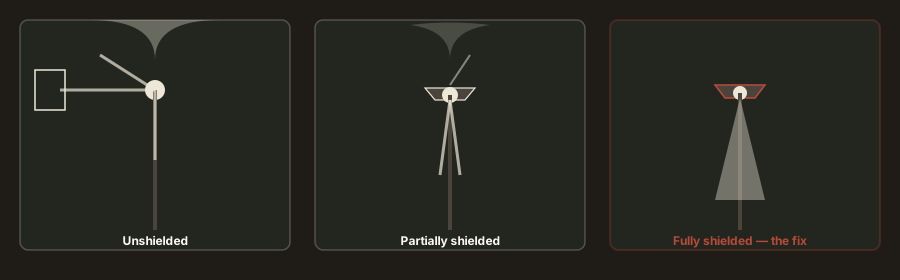
Only the rightmost fixture actually eliminates light pollution while still providing the same functional illumination — the difference between the three is entirely about where the fixture directs its light, not how bright the bulb itself is.
Common mistakes
Common Mistakes
Assuming light pollution is only an aesthetic issue about seeing fewer stars.
→ Recognize documented effects on human circadian rhythm and specific wildlife behaviors (sea turtle navigation, bird migration) as real, separate impacts beyond stargazing.
Assuming reducing light pollution means turning off needed safety lighting.
→ Most light pollution fixes involve shielding or redirecting fixtures so light goes only where it's needed, not eliminating functional lighting.
Treating all light pollution as the same problem.
→ Skyglow (upward scatter), light trespass (spillover onto unintended areas), and glare are distinct effects with different causes and different fixes.
Common misconception
“Light pollution is a minor cosmetic issue that mainly affects astronomers trying to see stars.”
Beyond obscuring the night sky, light pollution has documented effects on human circadian rhythm and hormone timing, and on specific, well-studied wildlife behaviors including sea turtle hatchling navigation and migratory bird orientation — effects with real biological and ecological consequences, not just a loss of stargazing visibility.
Why can shielding a streetlight fixture reduce light pollution without reducing its usefulness for road safety?
What to do next
What to do next
- If installing outdoor lighting at home, choose fully shielded, downward-directed fixtures over unshielded floodlights to reduce both skyglow and light trespass onto neighboring property.
- Consider warmer-temperature (less blue-heavy) bulbs for evening use, since blue-wavelength light has a stronger circadian-disrupting effect than warmer light.
- If you live near a coastal turtle-nesting area or a major bird migration flight path, check for local dark-sky or 'lights out' ordinances during relevant seasons.
- Limit bright screen and overhead light exposure in the hour or two before sleep, since this is the most direct, individually controllable circadian-rhythm lever available.