 KnowThis
Key Takeaways
Key Takeaways
- 1Sleep occurs in roughly 90-minute cycles alternating between lighter, deeper, and REM sleep stages — which is why waking mid-cycle can feel groggier than waking at a natural cycle boundary, even with similar total sleep time.
- 2The circadian rhythm, the body's roughly 24-hour internal clock, is heavily influenced by light exposure, which is why consistent wake times and controlled evening light exposure are core sleep hygiene habits.
- 3Sleep hygiene habits work by supporting the body's existing sleep architecture, not overriding it — consistency (same sleep/wake times) tends to matter more than any single individual habit in isolation.
The concept
Understanding sleep as cycling stages, not a uniform block, explains why timing matters almost as much as total duration for how rested someone feels on waking.
Two people sleep the same total number of hours, but one wakes up in the middle of a deep-sleep stage due to an alarm, while the other wakes up naturally near a cycle boundary. What does sleep-cycle science suggest about how each might feel?
Worked examples
Example 1: Timing sleep around 90-minute cycles (baseline case)
Example 2: Evening screen use delaying sleep onset (edge case / variation)
Example 3: Weekend "sleep-in" disrupting weekday schedule (real-world / applied case)
Why might sleeping in several extra hours on weekends actually make it harder to fall asleep at the usual time on Sunday night?
How it works (visual)
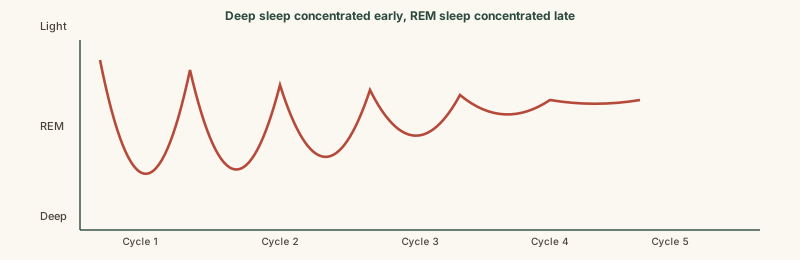
Deep sleep clusters early in the night, REM sleep clusters later — which is why cutting sleep short doesn't just reduce total time, it disproportionately removes later-cycle REM sleep.
Common mistakes
Common Mistakes
Using bright screens right up until bedtime.
→ Dim screens or switch to night-mode settings in the hour before bed to reduce delayed melatonin release from light exposure.
Sleeping in dramatically later on weekends than on weekdays.
→ Try to keep wake times relatively consistent across the week to avoid disrupting circadian timing (social jet lag).
Focusing only on total hours slept and ignoring sleep timing consistency.
→ Prioritize a consistent sleep/wake schedule alongside adequate total sleep time — both matter for how rested you feel.
Common misconception
“As long as you get 7-8 total hours, exactly when you sleep and wake doesn't matter.”
Total sleep duration matters, but sleep-cycle timing and circadian consistency matter too. Waking abruptly mid-cycle (especially during deep sleep) is commonly associated with more grogginess than waking near a natural cycle boundary, and a highly inconsistent sleep/wake schedule can disrupt the circadian rhythm's timing independent of total hours slept. Duration and timing are two separate, both-relevant factors, not one substitute for the other.
Try it yourself
This is a rough approximation using an average 90-minute cycle length — actual cycle length varies by person and night, so treat this as a general planning tool, not a precise prediction.
What to do next
What to do next
- Keep sleep and wake times consistent, including on weekends, to support circadian rhythm stability.
- Dim bright screens or use night-mode settings in the hour before bed.
- Consider planning sleep duration in approximate 90-minute cycle increments rather than an arbitrary round number.
- See a doctor for persistent insomnia, loud snoring with breathing pauses, or ongoing daytime fatigue despite adequate time in bed.