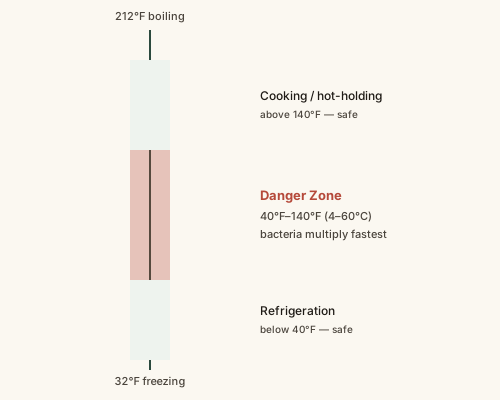
Food hygiene centers on limiting the time perishable food spends in the temperature 'danger zone' (roughly 40°F to 140°F / 4°C to 60°C) where bacteria multiply fastest, alongside preventing cross-contamination between raw and ready-to-eat food — a small set of mechanisms behind most specific food-safety guidance.
Reading time
— 4 min
Updated
— Aug 21, 2026
Fact-reviewed
— Aug 21, 2026
This entry is general food-safety information, not medical advice. If you suspect food poisoning or have symptoms of foodborne illness, contact a doctor.
Key Takeaways
Key Takeaways
1Bacteria on perishable food multiply fastest in the 'temperature danger zone' — roughly 40°F to 140°F (4°C to 60°C) — which is why refrigeration, prompt cooking, and hot-holding rules all revolve around this specific range.
2Cross-contamination — bacteria moving from raw food to ready-to-eat food via shared surfaces, utensils, or hands — is a separate risk from temperature, and needs its own separate prevention steps.
3Color and smell are unreliable indicators of whether food has reached a safe internal cooking temperature — a food thermometer is the only reliable way to confirm it.
The concept
Most food-safety rules come down to two separate mechanisms: temperature and contact. Bacteria multiply fastest in the temperature danger zone (roughly 40°F to 140°F), so keeping food either well-refrigerated or well-heated limits their growth. Separately, cross-contamination — like using the same cutting board for raw chicken and then salad — can transfer bacteria directly, regardless of temperature.
Separating "is this food at a bacteria-friendly temperature" from "could bacteria have transferred onto this food" clarifies why food safety needs both a thermometer and separate cutting boards, not just one or the other.
Quick check
A cook uses the same unwashed cutting board for raw chicken and then for chopping salad vegetables. Even if both foods are kept at safe temperatures, what risk remains?
Worked examples
Example 1: Leftovers left out overnight (baseline case)
A cooked dish left at room temperature overnight (well beyond the roughly 2-hour danger-zone guideline) has spent many hours in the bacteria-friendly temperature range, allowing bacterial populations to grow substantially — USDA guidance is to discard such food rather than risk it, since reheating doesn't reliably eliminate toxins some bacteria produce during that extended time, even if it kills the bacteria themselves.
Example 2: Verifying ground meat with a thermometer instead of color (edge case / variation)
Ground beef can appear fully browned on the outside while remaining under-cooked internally, or can retain a pink tinge even when it has reached a safe internal temperature, depending on factors like myoglobin content and cooking method — color is not a reliable safety indicator. Checking with a food thermometer against the USDA's specific safe minimum temperature for ground beef removes the guesswork entirely.
Example 3: Marinating raw meat and reusing the marinade (real-world / applied case)
A marinade that raw chicken sat in contains bacteria transferred from the raw meat. Brushing that same marinade onto the chicken again after it's cooked (or using it as a sauce) reintroduces those bacteria onto food that won't be cooked further — a specific, common cross-contamination scenario. USDA guidance is to set aside a separate portion of marinade before adding raw meat, or to boil the used marinade thoroughly before reusing it, directly addressing this specific transfer pathway.
Quick check
Why is it unsafe to reuse marinade that raw chicken sat in as a finishing sauce, even if the chicken itself is fully cooked?
How it works (visual)
The temperature danger zone
Nearly every specific food-storage rule — refrigerate promptly, keep hot food hot, don't leave food out too long — is a different way of minimizing time spent inside this one temperature band.
Common mistakes
Common Mistakes
✕
Judging whether meat is safely cooked by color alone.
→ Use a food thermometer and check against the specific safe minimum internal temperature for that food type — color isn't a reliable indicator.
✕
Using the same cutting board or utensils for raw meat and ready-to-eat food without washing between uses.
→ Use separate cutting boards for raw meat and produce, or thoroughly wash and sanitize between uses.
✕
Leaving perishable food out at room temperature for extended periods.
→ Refrigerate perishable food within about 2 hours (1 hour if the environment is above about 90°F/32°C).
Common misconception
“If food looks and smells fine, it's safe to eat.”
Many foodborne pathogens don't noticeably change a food's appearance, smell, or taste before making someone sick — spoilage bacteria (which cause obvious off smells) and pathogenic bacteria (which cause illness) aren't always the same organisms. Relying on time-in-danger-zone guidelines and, for cooking, a verified internal temperature is a more reliable safety check than sensory judgment alone.
What to do next
What to do next
Refrigerate perishable food within about 2 hours of cooking or purchase.
Use a food thermometer to verify safe internal cooking temperatures rather than judging by color.
Use separate cutting boards and utensils for raw meat versus ready-to-eat food.
Set aside a separate portion of any marinade before it contacts raw meat, or thoroughly boil used marinade before reusing it.
FAQ
FAQ
Related terms
Related terms
Temperature danger zone
The roughly 40°F to 140°F (4°C to 60°C) range in which bacteria on perishable food multiply fastest — the basis for most food refrigeration and hot-holding guidance.
Cross-contamination
The transfer of bacteria from one food (commonly raw meat) to another food, surface, or utensil, often through shared cutting boards, hands, or storage containers.
Safe internal cooking temperature
The minimum internal temperature a specific food must reach during cooking to reliably kill common foodborne pathogens, verified with a food thermometer rather than color or appearance alone.
A cook uses the same unwashed cutting board for raw chicken and then for chopping salad vegetables. Even if both foods are kept at safe temperatures, what risk remains?
This entry was researched from public sources and drafted with AI-assisted tools, then edited — errors are still possible. Spot one, or want a topic covered? Read our disclaimer.
 KnowThis