E-waste is discarded electronic equipment that contains both hazardous materials (lead, mercury, cadmium) and valuable recoverable metals (gold, copper, palladium), which is why proper e-waste disposal matters both for pollution prevention and for the resource-recovery opportunity informal, unsafe recycling wastes.
Reading time
— 4 min
Updated
— Aug 22, 2026
Fact-reviewed
— Aug 22, 2026
Key Takeaways
Key Takeaways
1E-waste is one of the fastest-growing waste categories globally, per the UN Global E-waste Monitor, driven by shortening device lifecycles and rising electronics consumption.
2The same electronics that contain hazardous substances (lead, mercury, cadmium) also contain valuable recoverable metals (gold, copper, palladium) — e-waste is simultaneously a pollution risk and a resource-recovery opportunity, called urban mining.
3Most of the world's e-waste is not formally recycled, and a large share is processed informally with methods (open burning, unprotected acid baths) that release the very hazardous substances formal recycling is designed to safely contain.
The concept
E-waste is any discarded electronic device — phones, laptops, TVs, batteries. It's a problem for two connected reasons: it contains hazardous materials like lead and mercury that can leak into soil and water if dumped carelessly, and it also contains genuinely valuable metals like gold and copper that are worth recovering rather than throwing away. Proper e-waste recycling captures the valuable materials safely; improper disposal or informal recycling releases the hazardous ones instead.
Because the same material stream carries both the hazard and the value, the disposal method — not the material itself — determines whether a discarded phone becomes a pollution source or a recovered resource.
Quick check
Why is e-waste often described as both a pollution problem and a resource opportunity at the same time?
Worked examples
Example 1: A phone dropped in household trash (baseline case)
An old phone thrown into regular household trash ends up in a landfill, where its battery and circuit board materials, including lead and lithium, remain buried rather than recovered or safely contained long-term. Neither the pollution risk nor the recoverable value is properly addressed — it's simply removed from sight.
Example 2: The same phone taken to a formal e-waste recycler (edge case / variation)
That same phone dropped off at a certified e-waste recycling program instead goes through mechanical disassembly and controlled material recovery — battery materials are separated and processed under safety controls, and gold, copper, and other metals from the circuit board are recovered for reuse in new manufacturing. Same device, opposite outcome, entirely determined by the disposal pathway chosen.
Example 3: Informal e-waste processing communities (real-world / applied case)
In regions with large informal e-waste processing operations, workers without protective equipment burn discarded circuit boards and wiring in open pits to recover copper and other metals, releasing lead and other heavy metal contamination directly into surrounding soil, air, and water. Studies cited by WHO and UN e-waste monitoring bodies have documented elevated heavy metal exposure in children living near these sites — a direct, well-documented illustration of what happens when the hazardous side of e-waste isn't safely contained during recovery.
How it works (visual)
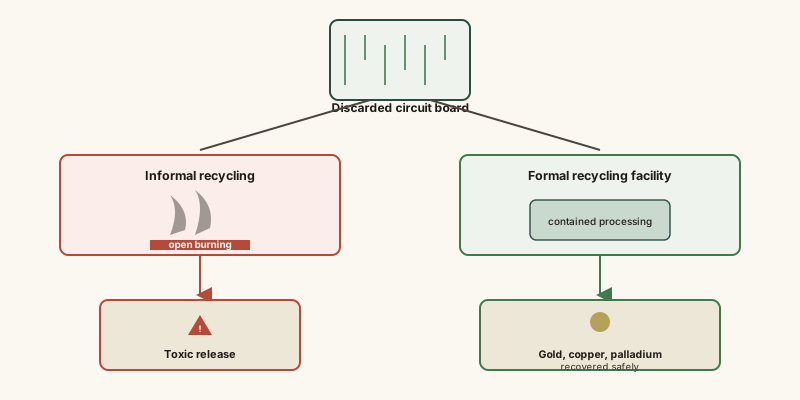
Same e-waste, two different disposal paths
Both branches start from the exact same discarded material — the diagram's split point is the disposal pathway itself, not any difference in the underlying electronics.
Common mistakes
Common Mistakes
✕
Throwing old electronics and batteries into regular household trash.
→ Use a designated e-waste collection point or manufacturer take-back program — most regions have specific rules against disposing of electronics in general trash because of the hazardous materials involved.
✕
Assuming e-waste recycling has no real economic value, so it's purely a cost or chore.
→ Recognize that e-waste recovery ('urban mining') recaptures genuinely valuable metals like gold, copper, and palladium — it's an economically real resource-recovery activity, not just waste disposal.
✕
Assuming any e-waste 'recycling' is automatically safe.
→ Informal recycling operations can recover some value while releasing hazardous substances unsafely — using a certified formal recycler matters, not just recycling in general.
Common misconception
“Electronic waste is a relatively small, minor part of the overall global waste problem.”
The UN Global E-waste Monitor documents e-waste as one of the fastest-growing waste streams worldwide, driven by shortening device lifecycles and rising global electronics consumption — it's a large and rapidly increasing category, not a minor niche issue.
Quick check
Why does formal e-waste recycling matter specifically for child health, according to WHO research?
What to do next
What to do next
Take old electronics and batteries to a certified e-waste collection point rather than regular household trash — many retailers and manufacturers offer take-back programs.
Consider donating or reselling still-functional devices before recycling, since extending a device's usable life reduces e-waste generation more directly than any recycling method.
Check whether your e-waste recycler is certified (such as under R2 or e-Stewards standards in the US) rather than assuming any drop-off point uses safe processing methods.
Understand that batteries specifically often need separate handling from other electronics due to fire risk and distinct material recovery processes.
FAQ
FAQ
Related terms
Related terms
E-waste
Discarded electrical or electronic equipment — phones, computers, appliances, batteries — that contains both hazardous substances and recoverable valuable materials.
Urban mining
The practice of recovering valuable metals like gold, silver, copper, and palladium from discarded electronics and other manufactured products, rather than extracting them from newly mined ore.
Informal e-waste recycling
Unregulated, often manual processing of e-waste (such as open burning to recover metal, or acid baths without protective equipment) that recovers some value but releases toxic substances without safety controls.
Extended producer responsibility
A policy approach that makes manufacturers responsible for the end-of-life management of the products they sell, often funding formal collection and recycling programs for items like electronics.
This entry was researched from public sources and drafted with AI-assisted tools, then edited — errors are still possible. Spot one, or want a topic covered? Read our disclaimer.
 KnowThis