 KnowThis
Key Takeaways
Key Takeaways
- 1Hosts for events like the Olympics and the World Cup are selected by a formal vote of the governing body's own membership (IOC members, FIFA member associations), not by any public election in the candidate country.
- 2Candidate cities or countries submit a detailed host city bid covering venues, transportation, accommodation, and financing, which is technically assessed by an evaluation commission before the final vote.
- 3Winning a bid creates binding legal obligations under a host contract, which is why host selection carries real, sometimes contentious, long-term financial and infrastructure commitments beyond the vote itself.
The concept
The distinction between a governing body's internal membership vote and a public election matters for understanding why host selection outcomes sometimes surprise the general public in a candidate country — the electorate deciding isn't the country's own citizens, but the governing organization's voting members.
A country's citizens widely support their nation's bid to host the World Cup, but a different country ultimately wins. What does this tell you about how the process works?
Worked examples
Example 1: A standard multi-candidate bidding cycle (baseline case)
Example 2: A reformed, less competitive selection process (edge case / variation)
Example 3: The binding obligations that follow winning a bid (real-world / applied case)
Why do some governing bodies use an evaluation commission and technical assessment report rather than deciding purely on the vote itself?
How it works (visual)
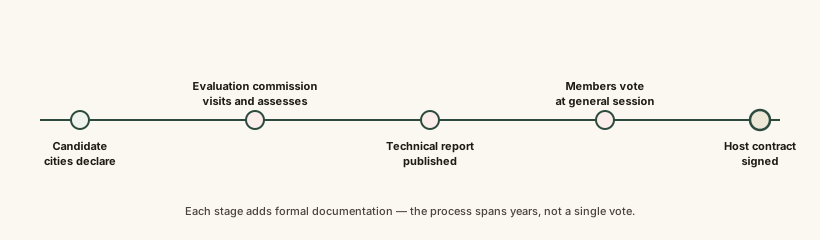
Each stage narrows the field and adds formal documentation — from an initial expression of interest to a legally binding contract — which is why the process typically spans several years rather than concluding at a single vote.
Common mistakes
Common Mistakes
Assuming host selection is decided by a public vote or referendum in the candidate country.
→ Remember the final vote is held among the governing body's own membership (IOC members, FIFA member associations), a separate electorate from any candidate country's general public.
Treating a bid announcement and the final winning vote as the same event.
→ Recognize the bidding process spans years, including formal candidacy declarations, evaluation commission visits, and a technical report, before the actual vote.
Underestimating what winning a bid actually commits a host to.
→ Remember a winning bid leads to a binding host contract with specific infrastructure and financial obligations that extend years beyond the vote itself.
Common misconception
“A country's citizens vote to decide whether their country hosts events like the Olympics or World Cup.”
The final host-selection vote is held among the governing body's own voting membership — IOC members for the Olympics, FIFA member associations for the World Cup — not the general public of any candidate country. A national government may hold its own domestic process (public consultation, a local referendum on whether to bid at all) as part of deciding whether to submit a bid, but that domestic step is separate from, and doesn't determine, the governing body's actual selection vote.
What to do next
What to do next
- When reading about a host selection result, check whether the vote described was held by the governing body's membership or a domestic public process — they're different steps.
- Look for the technical evaluation commission's assessment report when researching how a specific bid was received, not just the final vote outcome.
- Distinguish between a country's public support for bidding and the actual binding host contract obligations that follow winning.
- Check a governing body's current official rules, since bidding processes have been reformed over time and specifics vary by organization and cycle.