 KnowThis
Key Takeaways
Key Takeaways
- 1Lobbying is the formal practice of advocating to lawmakers on behalf of an organized interest — legally distinct from bribery or corruption, even though public discussion often blurs the two together.
- 2Interest groups span a far wider range than 'big business' alone — trade associations, labor unions, environmental nonprofits, and professional societies all lobby, often on opposing sides of the same issue.
- 3Many jurisdictions require registered lobbyists to publicly disclose who they represent and what they spent, which is the actual mechanism that makes lobbying activity visible and auditable rather than hidden.
The concept
Understanding lobbying as a formal, disclosed practice — rather than a synonym for corruption — is what makes it possible to evaluate specific instances (was this disclosed? does the spending look disproportionate to the group's actual membership?) rather than treating all advocacy as equally suspect.
A trade association pays a registered lobbyist to meet with legislators and argue against a proposed regulation, filing all required disclosure reports. Is this activity itself illegal?
Worked examples
Example 1: A single interest group lobbying on a bill (baseline case)
Example 2: Opposing interest groups lobbying the same bill from different sides (edge case / variation)
Example 3: Distinguishing disclosed lobbying from an actual bribery case (real-world / applied case)
What specifically distinguishes illegal bribery from legal, disclosed lobbying?
How it works (visual)
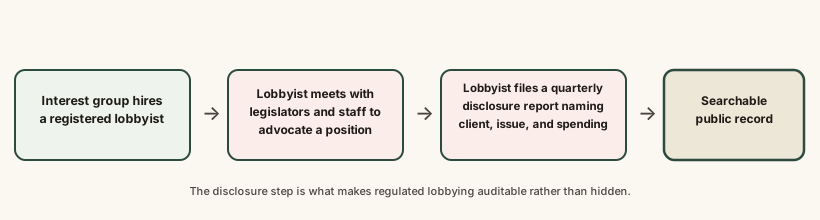
The disclosure step is what separates regulated lobbying from opaque influence — it's the point at which the activity becomes a public, auditable record rather than a private arrangement.
Common mistakes
Common Mistakes
Treating 'lobbying' and 'corruption' as synonyms.
→ Check whether the activity described is disclosed advocacy through legal channels (lobbying) or an undisclosed direct exchange of value for a specific official act (bribery/corruption) — they're legally and practically distinct.
Assuming only large corporations engage in lobbying.
→ Remember interest groups span labor unions, environmental nonprofits, professional associations, and advocacy groups across the political spectrum — not just industry.
Assuming lobbying activity is inherently hidden or untraceable.
→ Check the relevant jurisdiction's lobbying disclosure registry — in regulated systems, registered lobbyists' clients, issues, and spending are matters of public record.
Common misconception
“All lobbying represents a form of corruption or improper influence over lawmakers.”
Lobbying is a formally regulated, often publicly disclosed practice of advocacy, legally distinct from bribery, which involves a direct exchange of something of value for a specific official act. Interest groups across the political spectrum — unions, industry associations, advocacy nonprofits — all engage in disclosed lobbying, frequently on opposing sides of the same issue. Legitimate debate exists over how much influence money should be able to buy in a political system, but that's a separate question from whether the underlying activity of disclosed advocacy is itself corrupt.
What to do next
What to do next
- When a news story mentions lobbying on an issue you care about, check whether both sides of the issue have registered interest groups involved, not just the side being reported on.
- Look up your jurisdiction's lobbying disclosure registry to see what's actually a matter of public record.
- Distinguish a specific bribery allegation (a direct exchange for an official act) from a general claim of 'lobbying influence' when reading coverage of a scandal.
- Remember that an interest group representing a cause you support is using the same formal mechanism as one representing a cause you oppose.