 KnowThis
Key Takeaways
Key Takeaways
- 1A wire service (news agency) gathers reporting and licenses it to many other outlets, which is why a near-identical breaking-news paragraph can legitimately appear across dozens of otherwise unrelated publications at once.
- 2The wire service's byline on a story signals it was licensed content, not something the outlet running it independently reported itself.
- 3Wire services generally aim for a neutral, fact-first writing style specifically because their content is licensed by outlets with very different editorial slants, all of whom need to be able to run the same base story.
The concept
The practical reason to notice a wire-service byline isn't suspicion — it's context: it tells you the outlet running the story is relying on shared reporting, not necessarily its own original investigation.
If two unrelated news outlets publish an almost identical paragraph about a breaking event, does that suggest one outlet copied the other without credit?
Worked examples
Example 1: A local paper running a wire story (baseline case)
Example 2: The same wire story with different headlines (edge case / variation)
Example 3: An outlet supplementing wire content with original reporting (real-world / applied case)
Why do major wire services generally aim for a neutral, restrained writing style in their straight news coverage?
How it works (visual)
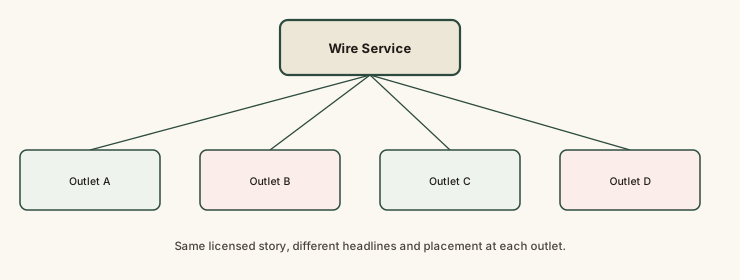
The fan-out shape is the entire point — one reporting effort at the top efficiently reaches readers through many independent outlets at the bottom, each making its own editorial choices around the same base content.
Common mistakes
Common Mistakes
Assuming identical wording across multiple outlets means one copied another without credit.
→ Check for a wire-service byline first — shared licensed wire content is the far more common explanation.
Assuming a story with a wire-service byline was independently verified by the outlet running it.
→ Recognize the outlet is relying on the wire service's own reporting and verification standards, not necessarily conducting its own independent check.
Assuming outlets running the same wire story always agree with its framing or emphasis.
→ Remember outlets still make independent choices about headlines, placement, and whether to run the story at all, even when the body text is shared.
Common misconception
“Identical news wording across unrelated outlets is a sign of media collusion or a coordinated messaging campaign.”
Shared wire-service content is a longstanding, transparent, and entirely normal part of how journalism operates — outlets openly license and credit wire agencies specifically so readers can identify the source. It reflects an efficient division of labor (agencies specialize in gathering, outlets specialize in distribution and local relevance), not hidden coordination between competing news organizations.
What does a byline crediting a wire service (rather than an individual outlet's own reporter) tell a careful reader?
What to do next
What to do next
- Next time you notice near-identical wording across outlets, check for a wire-service byline before assuming anything unusual is happening.
- Notice which of your regular news sources rely heavily on wire content versus producing substantial original reporting.
- Look up a major wire service's own editorial standards page to see how they describe their approach to neutrality and verification.
- When comparing outlet bias, focus on headline choices and story placement rather than shared wire-story body text, which reflects the agency's style more than any individual outlet's.