 KnowThis
Key Takeaways
Key Takeaways
- 1Local government is typically responsible for the public services residents interact with most directly and most often — waste collection, local roads, water and sewer, zoning, and local policing.
- 2Local government is funded mainly through local taxes (commonly property tax), often supplemented by intergovernmental transfers from higher levels of government.
- 3Zoning — local rules on what can be built where — is one of local government's most consequential and least-noticed powers, directly shaping how a community physically develops over time.
The concept
The reason local government gets comparatively little public attention despite handling so many day-to-day services is that its work is often visible only when something goes wrong — a pothole, a missed trash pickup — rather than celebrated when it functions smoothly.
Which level of government is typically responsible for local road repair and trash collection?
Worked examples
Example 1: How a local water system gets funded (baseline case)
Example 2: Zoning shaping what gets built (edge case / variation)
Example 3: A local government relying on intergovernmental transfers (real-world / applied case)
Do all local governments fund their public services entirely from their own local tax revenue, with no outside funding?
How it works (visual)
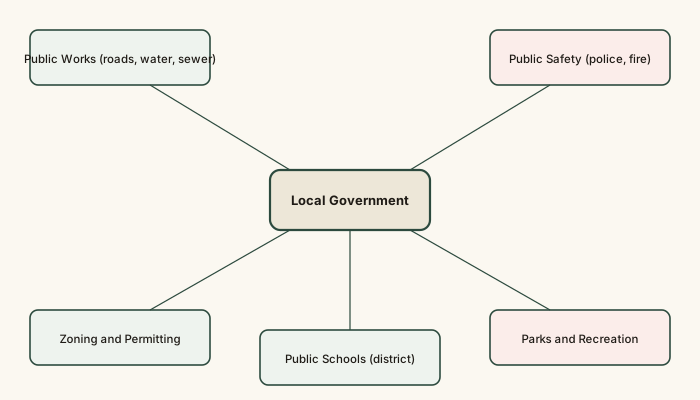
Laid out this way, it's clear how much of a resident's direct day-to-day interaction with "government" is actually interaction with this one local layer, not the national government most political news coverage focuses on.
Common mistakes
Common Mistakes
Assuming day-to-day service problems (potholes, water issues) are national government's responsibility to fix.
→ Check whether the service falls under local government's typical scope first — most direct daily services are locally, not nationally, administered.
Underestimating zoning's real impact on a community.
→ Recognize zoning decisions directly shape what can be built where, often for decades — it's one of local government's most consequential, least-visible powers.
Assuming local government is entirely self-funded.
→ Check for intergovernmental transfers — many local governments, especially smaller ones, depend on funding from higher government levels to cover full service costs.
Common misconception
“Most public services people rely on daily come from national government policy.”
The services residents interact with most frequently and directly — road maintenance, trash collection, water service, local permits, local policing — are typically administered by local government, not national government. National government generally focuses on broader national-scale policy areas, while local government handles the operational, day-to-day delivery of the services people actually notice.
Why might a local government issue a municipal bond rather than paying for a large infrastructure project entirely out of a single year's tax revenue?
What to do next
What to do next
- Next time you notice a local service issue (roads, trash, water), check your city or county's official site — most publish exactly which department handles which service.
- Look up your local government's current budget breakdown to see how much comes from local taxes versus intergovernmental transfers.
- If you're curious about zoning, check your address's current zoning designation on your local government's public zoning map.
- Attend or watch a local council meeting at least once — it's usually where the decisions most directly affecting your daily surroundings actually get made.