 KnowThis
Key Takeaways
Key Takeaways
- 1The endocrine system is a network of glands — including the pituitary, thyroid, adrenal glands, and pancreas — that release hormones directly into the bloodstream to regulate processes throughout the body.
- 2Hormones only affect cells that have matching receptors for them, and most hormone levels are kept in a stable range through negative feedback loops, where rising hormone levels suppress further release.
- 3Testosterone and estrogen are both produced in every body regardless of sex, just at different typical levels — neither hormone is exclusive to one sex.
The concept
That feedback-loop mechanism is the working principle behind nearly every hormone system in the body, and it's easiest to see clearly by walking through exactly what happens when one loop is put under stress — like a sudden drop in blood sugar. Not every hormone loop responds to a body-condition signal like blood sugar, either — melatonin, released on a roughly 24-hour cycle set largely by light exposure, is what drives the brain's sleep-wake timing rather than any single measurable blood level.
After eating a meal, blood glucose rises, and the pancreas releases insulin. As insulin helps cells absorb that glucose, blood sugar levels start to fall back toward normal. What happens to insulin release as blood sugar falls?
Worked examples
Example 1: The thyroid negative feedback loop (baseline case)
Example 2: When a feedback loop fails — insulin and diabetes (edge case / variation)
Both type 1 and type 2 diabetes result in chronically high blood sugar, but they involve different problems within the insulin feedback system. What's the key difference?
Example 3: The fight-or-flight hormone cascade (real-world / applied case)
When the brain perceives an acute threat, the hypothalamus signals the adrenal glands to rapidly release adrenaline and, over a slightly longer timescale, cortisol into the bloodstream. Adrenaline acts within seconds, increasing heart rate and cardiac output, dilating airways for faster breathing, and redirecting blood flow toward muscles — all through hormone receptors on those specific tissues. Cortisol follows over minutes, raising blood glucose by prompting the liver to release stored sugar, giving muscles more available fuel, while also temporarily suppressing non-urgent processes like digestion and long-term immune activity. Once the perceived threat passes, both hormone levels fall and the body's systems return to baseline — but if this stress response is triggered too frequently or for too long, sustained elevated cortisol has been linked to negative effects on blood pressure, blood sugar regulation, and immune function.
How it works (visual)
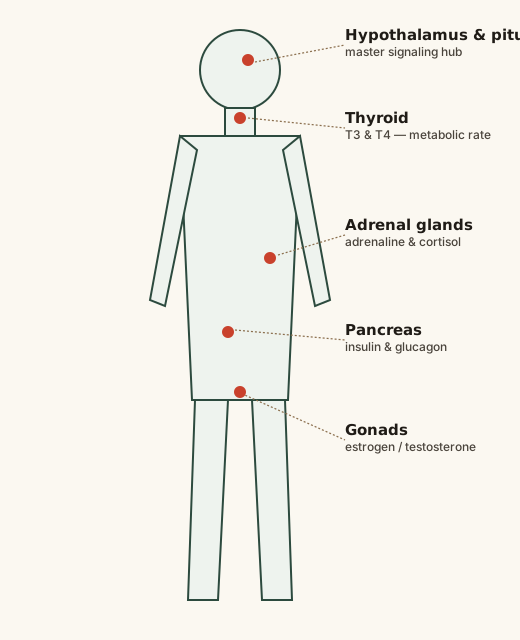
Notice the hypothalamus and pituitary sit at the top of the chain, coordinating several glands below them rather than acting alone — this is why a problem originating in the pituitary can disrupt hormone levels in several apparently unrelated organs at once. Each gland below reacts primarily to its own feedback signal, which is why, for example, a stressful event affects the adrenal glands quickly while thyroid hormone levels shift on a much slower timescale.
Common mistakes
Common Mistakes
Thinking hormones act instantly, the same way a nerve signal does.
→ Hormones travel through the bloodstream, which takes longer to reach target cells than a direct nerve impulse — but the effect, once it starts, is often more widespread and longer-lasting than a nerve signal.
Assuming testosterone is a 'male hormone' and estrogen is a 'female hormone,' each exclusive to one sex.
→ Both hormones are produced in every body regardless of sex — testosterone is made in the ovaries and adrenal glands as well as the testes, and estrogen is produced via a conversion process even in bodies with testes. Typical levels differ, but neither hormone is exclusive to one sex.
Believing the adrenal glands only matter during rare emergencies.
→ The adrenal glands and their hormones, especially cortisol, are active continuously as part of everyday metabolism and blood pressure regulation, not just during acute fight-or-flight moments.
Common misconception
“Testosterone is exclusively a 'male' hormone and estrogen is exclusively a 'female' hormone.”
Both hormones are produced in every human body, regardless of sex — the real difference between sexes is typical relative levels, not which hormones are present at all. Testosterone is produced not just in the testes but also in the ovaries and the adrenal glands. Estrogen is produced in the ovaries but also in smaller amounts in bodies with testes, through an enzyme called aromatase that converts testosterone into estrogen. Both hormones play roles that go well beyond reproduction in every body, including maintaining bone density, supporting muscle mass, and regulating mood — which is one reason hormone level changes with age (like the drop in estrogen after menopause) affect bone and cardiovascular health broadly, not just reproductive function.
A person assumes only men have testosterone in their bodies. What does the endocrine science actually show?
What to do next
What to do next
- Next time you feel your heart race under sudden stress, connect it to adrenaline being released by the adrenal glands as part of a hormone response, not just 'nerves.'
- If you or someone you know manages diabetes, note whether it's type 1 (production) or type 2 (response) to better understand why the treatment approach differs.
- Read a nutrition label's sugar content with the insulin feedback loop in mind — recognizing that blood sugar naturally rises and falls, and insulin is the body's built-in mechanism for managing that swing.
- Read the related entry on Blood & the Circulatory System in Depth to see how hormones like adrenaline and cortisol travel through and act on the circulatory system.