 KnowThis
Key Takeaways
Key Takeaways
- 1A minor cut is cleaned with water, has pressure applied if it's bleeding, and is covered with a clean dressing; a minor burn is cooled under cool (never ice-cold) running water for several minutes and left uncovered or loosely covered.
- 2The single most important skill isn't the technique — it's correctly recognizing when a cut or burn is NOT minor (deep, large, on the face/hands/joints, from a chemical or electrical source, or showing signs of infection) and needs professional care instead.
- 3Ice should never go directly on a burn — it can damage already-injured tissue further; cool running water is the correct first response per Mayo Clinic guidance.
The concept
The technique for a minor injury is genuinely simple — the real skill is the judgment call of whether an injury actually qualifies as minor in the first place.
Someone gets a small kitchen burn and immediately presses an ice cube directly onto it. What's the problem with this response?
Worked examples
Example 1: A minor kitchen cut (baseline case)
Example 2: A minor scald that turns out not to be minor (edge case / variation)
Why does burn size (larger than the affected person's palm) matter for deciding whether home treatment is appropriate?
Example 3: Recognizing signs of infection days after a minor cut (real-world / applied case)
How it works (visual)
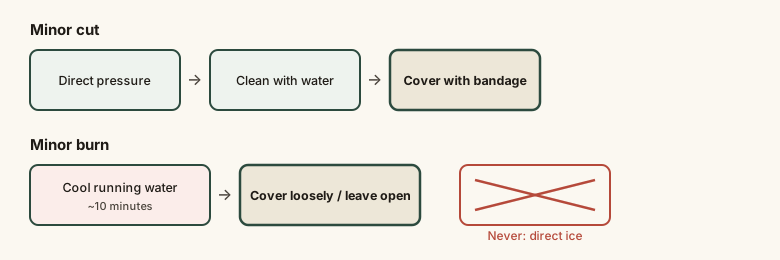
The two sequences look similar but differ in a key way: pressure-then-clean for a cut, cool-water-only (no ice, no pressure) for a burn — mixing up the two techniques is itself a common, avoidable first aid mistake.
Common mistakes
Common Mistakes
Applying ice directly to a burn.
→ Use cool (not ice-cold) running water for about 10 minutes instead, per Mayo Clinic guidance.
Popping a blister from a minor burn.
→ Leave an intact blister alone — the unbroken skin protects against infection while the tissue underneath heals.
Continuing home treatment after a wound shows signs of infection (spreading redness, warmth, pus, increasing pain days later).
→ Seek professional medical care once these signs appear — they indicate the injury has moved beyond what first aid alone can address.
Common misconception
“If a cut or burn isn't actively bleeding heavily or extremely painful, it's automatically safe to just treat at home indefinitely.”
Bleeding and pain level aren't the only — or even the primary — criteria first aid sources use to define "minor." Size, depth, location (face, joints, hands), cause (chemical, electrical), and the appearance of infection days later all matter independently, per Red Cross and CDC guidance. A wound that looked minor at first can cross out of that category later.
What is the most reliable way to decide whether a cut or burn should still be treated at home several days after the injury?
What to do next
What to do next
- For a minor cut: apply direct pressure to stop bleeding, clean with water, then cover with a clean dressing.
- For a minor burn: cool under running water for about 10 minutes — never apply ice directly — then leave uncovered or cover loosely.
- Learn the specific criteria (size, depth, location, cause) that move an injury out of the 'minor' category, and seek professional care when any apply.
- Watch any home-treated wound for days afterward for signs of infection, and seek professional care if they appear.