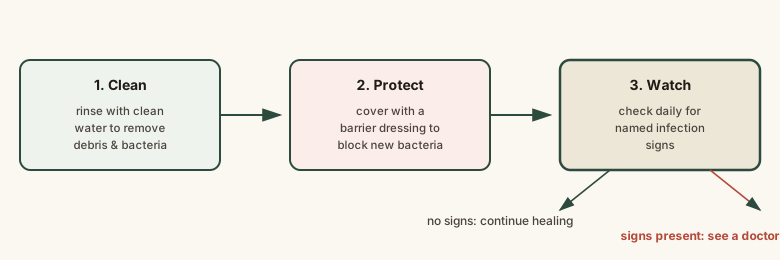
For minor wounds, the Mayo Clinic and CDC describe a simple sequence: clean the wound with water to physically remove debris and bacteria, apply a barrier (such as a bandage) to keep new contamination out, and watch for specific signs of infection (increasing redness, warmth, swelling, pus, or fever) that would call for professional care rather than continued home treatment.
Reading time
— 4 min
Updated
— Aug 21, 2026
Fact-reviewed
— Aug 21, 2026
This entry covers general wound-care principles for minor wounds only — it is not medical advice. Deep wounds, wounds that won't stop bleeding, animal or human bites, or any wound showing signs of infection need professional medical evaluation. When in doubt, see a doctor or seek emergency care rather than relying on home treatment alone.
Key Takeaways
Key Takeaways
1Basic wound care for minor wounds follows a simple sequence: clean, protect, watch — each step exists to keep bacteria out while the body's own healing process does the actual repair.
2Cleaning with water physically flushes out debris and surface bacteria; it isn't about applying a strong antiseptic as the primary step, which can actually irritate healthy tissue in some cases.
3Specific, named infection signs (increasing redness, warmth, swelling, pus, red streaking, or fever) are the trigger for seeking professional care — not a fixed number of days of home treatment.
The concept
For a minor wound, the Mayo Clinic's basic sequence is: rinse it with clean water to remove dirt and debris, apply gentle pressure with a clean cloth if it's bleeding, then cover it with a barrier dressing to keep new bacteria out while it heals. After that, the main job is watching for wound infection signs — if any appear, it's time to see a doctor rather than continuing home care alone.
None of this requires special medical skill — the entire sequence is designed to be done safely at home for genuinely minor wounds, with a clear, named trigger for when to stop and get professional care instead.
Quick check
Why does the Mayo Clinic recommend plain water rather than a strong antiseptic like hydrogen peroxide as the primary way to clean a minor wound?
Worked examples
Example 1: The basic clean-protect-watch sequence (baseline case, conceptual only)
A minor scrape: rinse under clean running water until debris is gone, pat dry with a clean cloth, apply a thin layer of a basic antibiotic ointment if desired, and cover with an adhesive bandage. Change the dressing daily or when it gets wet or dirty, and watch the area over the following days for any of the named infection signs.
Example 2: When a wound is no longer "minor" (edge case / variation)
A cut that won't stop bleeding after several minutes of direct pressure, is deep enough to see fat or muscle, has jagged or gaping edges, or resulted from an animal or human bite falls outside the scope of basic home wound care and needs professional evaluation — some of these situations (deep wounds, bite wounds) carry a meaningfully higher infection risk that basic home care isn't designed to manage on its own.
Quick check
Why are animal or human bite wounds treated differently from an ordinary minor cut, even if the bite wound looks small?
Example 3: Recognizing infection signs during the watch phase (real-world / applied case)
Two days after a minor cut, the area around it becomes increasingly red (spreading beyond the original wound edge), feels warm to the touch, and develops a small amount of yellowish discharge. This combination — spreading redness, warmth, and discharge — matches the named infection-sign pattern from CDC/AAFP guidance, and is the specific trigger to see a doctor rather than continuing home dressing changes alone.
How it works (visual)
The clean, protect, watch sequence for minor wound care
The "watch" step isn't passive — it's an active check against a specific, named list of infection signs, which is what turns ordinary observation into a genuine decision point for seeking care.
Common mistakes
Common Mistakes
✕
Using hydrogen peroxide or iodine as the primary way to clean a minor wound.
→ Rinse with clean water instead — current guidance advises against routine use of strong antiseptics on healthy wound tissue.
✕
Treating a deep wound, a wound that won't stop bleeding, or a bite wound the same as an ordinary minor cut.
→ These situations carry meaningfully different risk and are generally recommended for professional evaluation, regardless of how the wound looks superficially.
✕
Assuming a wound is fine simply because it looked okay right after the injury.
→ Continue watching for infection signs over the following days — some infections develop after the initial injury looked uneventful.
Common misconception
“Stronger cleaning agents like hydrogen peroxide always make a wound heal cleaner and faster.”
Current wound-care guidance from the Mayo Clinic specifically advises against routine use of hydrogen peroxide and similar antiseptics on minor wounds, because they can damage or irritate healthy tissue at the wound edge — potentially slowing healing rather than speeding it. Plain water is generally the recommended primary cleaning method for minor wounds.
Quick check
What is the single most important practical takeaway from basic wound-care guidance?
What to do next
What to do next
For a minor wound, rinse with clean water rather than reaching for a strong antiseptic as the first step.
Cover a cleaned minor wound with a barrier dressing and change it regularly, or whenever it becomes wet or dirty.
Learn the named infection signs (increasing redness, warmth, swelling, pus, red streaking, fever) so you recognize them if they appear.
Seek professional care for deep wounds, wounds that won't stop bleeding, bite wounds, or any wound showing infection signs — these fall outside basic home wound care.
FAQ
FAQ
Related terms
Related terms
Wound infection sign
An observable change in a healing wound — such as increasing redness, warmth, swelling, pus, red streaking, or fever — that health agencies flag as a reason to seek professional care rather than continuing home treatment alone.
Barrier dressing
A bandage or dressing applied over a cleaned wound specifically to physically block new bacteria and debris from entering while the body's own healing process takes place underneath.
This entry was researched from public sources and drafted with AI-assisted tools, then edited — errors are still possible. Spot one, or want a topic covered? Read our disclaimer.
 KnowThis