The American College of Allergy, Asthma & Immunology and CDC both distinguish a mild, localized allergic reaction (like isolated hives or itching) from anaphylaxis, a rapid, whole-body reaction involving symptoms like difficulty breathing, swelling of the throat, or a sudden drop in blood pressure — anaphylaxis is treated as a medical emergency requiring an epinephrine auto-injector (if prescribed and available) and an immediate call to emergency services, since epinephrine's effect can wear off before full treatment is complete.
Reading time
— 4 min
Updated
— Aug 21, 2026
Fact-reviewed
— Aug 21, 2026
This entry is general information about how allergic reactions and anaphylaxis are classified — it is not medical advice and cannot tell you how to treat a specific reaction. Never use this page to decide whether or how to use a prescribed epinephrine auto-injector. If anaphylaxis is suspected, use epinephrine if prescribed and available, and call emergency services immediately regardless.
Key Takeaways
Key Takeaways
1Health agencies distinguish mild, localized allergic reactions (isolated hives, itching) from anaphylaxis — a rapid, whole-body reaction that's classified as a medical emergency.
2Anaphylaxis symptoms can include difficulty breathing, throat or tongue swelling, widespread hives, dizziness, and a sudden drop in blood pressure, often developing within minutes of exposure.
3If prescribed epinephrine is available for suspected anaphylaxis, using it and calling emergency services are both required — epinephrine's effect can wear off before the reaction fully resolves, so it doesn't replace emergency care.
The concept
Most allergic reactions are mild and stay in one place — a patch of hives, some itching, a bit of swelling where contact happened. Anaphylaxis is different: it's a fast, whole-body reaction that can affect breathing and blood pressure, and health agencies treat it as a medical emergency. If someone has a prescribed epinephrine auto-injector for exactly this situation, using it and calling emergency services are both part of the recommended response — one doesn't replace the other.
The practical skill here is recognizing when a reaction has crossed from "localized and mild" into "whole-body and rapid" — not deciding on treatment, which belongs to prescribed medication and emergency responders.
Quick check
Someone with a known food allergy develops hives only around their mouth after eating, with no breathing difficulty, throat swelling, or dizziness. Based on the mild-vs-anaphylaxis distinction, how would this generally be classified?
Worked examples
Example 1: The general symptom pattern that distinguishes anaphylaxis (baseline case, conceptual only)
Per ACAAI, anaphylaxis typically involves symptoms in two or more body systems at once — for example, widespread hives (skin) plus difficulty breathing (respiratory), or throat swelling plus dizziness (circulatory) — developing within minutes of exposure to a known or suspected trigger. A single, isolated symptom in one area is more consistent with a mild, localized reaction.
Example 2: Why timing matters as much as symptom type (edge case / variation, conceptual only)
A reaction that starts mild but rapidly adds new symptoms — say, hives that spread within minutes and are then joined by throat tightness — is treated with the same urgency as one that presents severely from the start, because the trajectory (fast-worsening) is itself a warning sign agencies flag, not just the symptom list at any single moment.
Quick check
Why do health agencies emphasize how quickly a reaction is changing, not just which symptoms are present at one moment?
Example 3: Why epinephrine use is paired with calling for help, not a substitute for it (real-world / applied case)
ACAAI guidance is explicit that after using a prescribed epinephrine auto-injector for suspected anaphylaxis, emergency services should still be called and the person should still be taken for medical evaluation — partly because epinephrine's effect is temporary, and partly because of the documented possibility of a biphasic reaction, where symptoms can return hours later. This is why "use the auto-injector, then you're done" is not the guidance any major health agency actually gives.
How it works (visual)
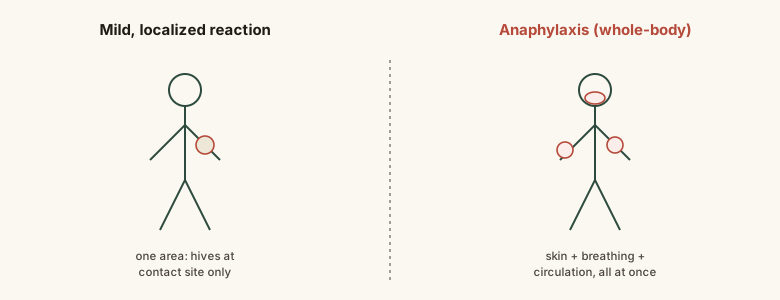
Mild, localized reaction vs. anaphylaxis — the multi-system pattern
The visual distinction is single-area involvement versus multiple body systems reacting at once — that multi-system pattern, not any one symptom alone, is what agencies use to flag anaphylaxis.
Common mistakes
Common Mistakes
✕
Treating epinephrine use as a complete treatment that doesn't require an emergency services call.
→ Always call emergency services after using epinephrine for suspected anaphylaxis — its effect is temporary and symptoms can return.
✕
Waiting to see if a fast-developing reaction 'settles down' before treating it as urgent.
→ Rapid worsening across multiple body systems is itself a warning sign — don't wait for the most severe possible presentation before acting.
✕
Assuming any reaction to a known allergen automatically counts as anaphylaxis.
→ Classification depends on the actual symptom pattern (multi-system, rapid) at the time, not simply on whether a known allergen was involved.
Common misconception
“Anaphylaxis always causes visible, dramatic swelling, so if there's no obvious swelling, it's not a serious reaction.”
Anaphylaxis is defined by its rapid, multi-system pattern — which can include respiratory symptoms (wheezing, throat tightness) or circulatory symptoms (dizziness, a drop in blood pressure) without dramatic visible swelling in every case. Relying on visible swelling alone as the deciding factor can miss a genuine emergency that's presenting primarily through breathing or circulation symptoms instead.
Quick check
What is the single most important practical takeaway about anaphylaxis first response?
What to do next
What to do next
Learn the general multi-system pattern (skin, breathing, circulation) that distinguishes anaphylaxis from a mild, localized allergic reaction.
If you or someone in your care has a prescribed epinephrine auto-injector, know where it's kept and how it's meant to be used, per your doctor's instructions.
Remember that using epinephrine does not replace calling emergency services — both are part of the recommended response.
Never wait for the 'worst-case' symptom picture before acting — rapid worsening across multiple systems is itself a reason to treat a reaction as urgent.
FAQ
FAQ
Related terms
Related terms
Anaphylaxis
A rapid, severe, whole-body allergic reaction that can involve difficulty breathing, throat swelling, and a sudden drop in blood pressure — classified as a medical emergency distinct from a mild, localized allergic reaction.
Epinephrine auto-injector
A prescribed device (such as an EpiPen) that delivers a fixed dose of epinephrine to rapidly counteract the symptoms of anaphylaxis — its effect can wear off before the reaction is fully resolved, which is why emergency follow-up care is still required after use.
A person is coughing forcefully and can still make some sound. According to Red Cross guidance, what category of obstruction is this, and what's the recommended response?
This entry was researched from public sources and drafted with AI-assisted tools, then edited — errors are still possible. Spot one, or want a topic covered? Read our disclaimer.
 KnowThis