 KnowThis
Key Takeaways
Key Takeaways
- 1A fixed expense stays the same amount each period (rent, a car loan payment, a subscription); a variable expense changes in amount based on usage or choices (groceries, utility bills).
- 2Fixed expenses are set by a contract or agreement and generally can't change mid-period without renegotiating or switching providers — variable expenses can shift the very next time money is spent.
- 3Because fixed expenses are locked in, they set a hard floor under a budget; variable expenses are where most short-term budget adjustments actually happen.
The concept
The practical use of this split shows up the moment a budget needs to be cut — knowing which expenses can respond immediately versus which ones require a structural change changes what actually gets attempted first.
A household needs to reduce spending this month. Which category of expense can realistically respond to that decision within the same billing period?
Worked examples
Example 1: Sorting a household's expenses into fixed and variable (baseline case)
Example 2: Why a "fixed" utility bill with a flat-rate plan is actually semi-fixed (edge case / variation)
Under a flat-rate utility billing plan, does using less electricity this month lower this month's bill?
Example 3: Using the split to plan a real budget cut (real-world / applied case)
How it works (visual)
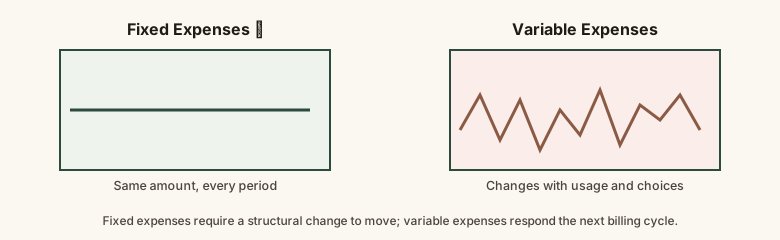
The flat line versus the jagged line is the entire practical difference — one category holds steady regardless of behavior, the other moves with it.
Common mistakes
Common Mistakes
Assuming a bill that's the same amount every month (like a flat-rate utility plan) is automatically a fixed expense in the budgeting sense.
→ Check whether the underlying cost driver still varies — a flat-rate plan smooths a variable cost into a fixed payment, but the usage behind it hasn't stopped being variable.
Trying to cut fixed expenses for an immediate, same-month budget fix.
→ Target variable expenses for immediate relief; treat fixed-expense reductions (refinancing, moving, canceling a contract) as a separate, longer-term project.
Forgetting to average irregular but predictable costs (an annual premium) into the monthly budget at all.
→ Treat semi-fixed/periodic costs as a third category, averaged monthly, rather than dropping them because they don't fit neatly as either fixed or variable.
Common misconception
“Variable expenses are the 'wasteful' spending and fixed expenses are always the 'necessary' spending.”
Fixed vs. variable is about how a cost responds to time and choices, not about whether it's necessary. Rent (fixed) and groceries (variable) are both needs; a gym membership (fixed) and a night out (variable) can both be wants. The needs-vs-wants distinction and the fixed-vs-variable distinction are independent categorizations that happen to overlap sometimes, not the same split by two different names.
What to do next
What to do next
- List your expenses and tag each one as fixed, variable, or semi-fixed/periodic.
- If a same-month budget adjustment is needed, focus on variable expenses first — they can respond within the current period.
- For fixed expenses that feel too high, treat reducing them as a separate project (refinance, renegotiate, or switch providers) rather than expecting an immediate change.
- Check bills that look flat for a hidden flat-rate or averaged-billing plan smoothing over what's actually a variable underlying cost.