Default is the formal status a loan enters after a borrower fails to make payments for a lender-defined period (often 90 to 270 days depending on the loan type), following an earlier stage called delinquency that begins with the very first missed payment — and each stage carries its own escalating consequences, from late fees and credit score damage to collections activity, acceleration of the full balance, and in some cases lawsuits or asset seizure.
Reading time
— 5 min
Updated
— Aug 22, 2026
Fact-reviewed
— Aug 22, 2026
Key Takeaways
Key Takeaways
1Default is the end point of a sequence, not the first thing that happens when a payment is missed — the loan is delinquent first, often for months, before it's classified as in default.
2How many missed payments it takes to reach default varies by loan type: many private loans define it around 90 days late, while some federal student loan default timelines are longer.
3Once a loan is in default, the lender can typically report it prominently to credit bureaus, demand the entire remaining balance at once (acceleration), and refer the debt to collections or pursue legal action, not just charge a late fee.
The concept
Missing one loan payment doesn't put you in default immediately. It first makes the loan delinquent, which usually means a late fee and, after 30 days or so, a mark on your credit report. Default is a more serious status that kicks in only after payments have been missed for a much longer stretch — often three months or more, depending on the type of loan — and it comes with bigger consequences: the lender can demand the whole remaining balance at once, send the debt to a collections agency, or in some cases sue.
Walking the timeline forward with concrete day-counts makes clear how much distance typically exists between a single missed payment and formal default.
Quick check
A borrower misses a loan payment for the first time. What is the loan's status immediately afterward?
Worked examples
Example 1: A personal loan payment missed once (baseline case)
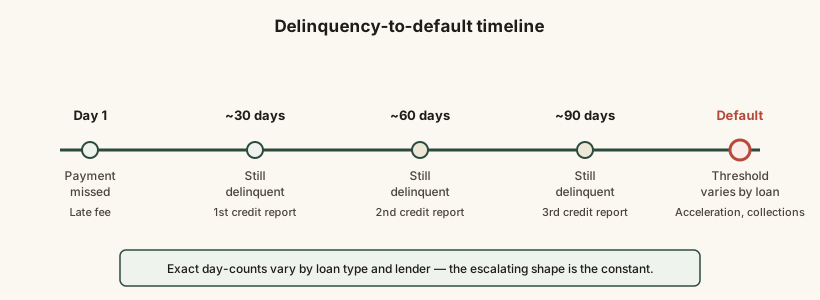
A borrower misses a personal loan payment due on the 1st of the month. Day 1: the payment is late and a late fee may apply per the loan agreement. Around day 30: if still unpaid, the lender typically reports the delinquency to credit bureaus for the first time. Around day 60 and day 90: additional delinquency reports typically follow if payment still hasn't been made, each doing further credit score damage. Only around 90 days past due, for many private consumer loan agreements, does the account move from delinquent to formally in default — a single missed payment, by itself, is delinquency, not default.
Example 2: A secured loan (auto loan) in default (edge case / variation)
An auto loan is secured by the vehicle itself, meaning the lender holds a lien against it. When this type of loan reaches default, the consequences can go beyond credit damage and collections: the loan agreement typically gives the lender the right to repossess the vehicle, since it serves as collateral for the debt. This is a mechanical difference from an unsecured loan (like most personal loans or credit cards) — with a secured loan, default can trigger the loss of the specific asset pledged as collateral, not just an escalation in collections activity, because the lender has a direct legal claim on that asset built into the loan agreement itself.
Quick check
Why can defaulting on a secured loan (like an auto loan) lead to a different consequence than defaulting on an unsecured personal loan?
Example 3: Federal student loan default and its distinct consequences (real-world / applied case)
Federal student loans follow a longer timeline to default — generally around 270 days of nonpayment — but the consequences once reached are broader than on many private loans, per Federal Student Aid: the entire unpaid balance can become due immediately, the default can be reported to credit bureaus, and the government has collection tools not typically available to private lenders, including withholding federal tax refunds or garnishing wages without first winning a lawsuit, because federal student loans are backed by specific federal statutory authority. This is a case where the general delinquency-to-default sequence is the same shape, but the specific consequences at the end of it differ meaningfully because of who the lender is and what legal powers apply to that type of loan.
How it works (visual)
The delinquency-to-default timeline
The exact day-counts shift by loan type and lender, but the escalating shape — fee, then reporting, then more reporting, then formal default — holds across most consumer loan agreements.
Common mistakes
Common Mistakes
✕
Assuming one missed payment immediately counts as default.
→ One missed payment starts delinquency, not default — default requires a much longer period of continued nonpayment defined by the specific loan agreement or loan type.
✕
Waiting until default to contact the lender or servicer.
→ Many lenders and servicers offer hardship options (deferment, modified payment plans) during delinquency, before default — reaching out earlier generally preserves more options than waiting.
✕
Assuming all loan types default on the same timeline.
→ Default timelines differ by loan type and lender — many private consumer loans define default around 90 days past due, while federal student loans generally use a longer roughly 270-day timeline — check the specific loan agreement or program rules.
Common misconception
“Default just means you're a little behind on payments.”
Default is a specific, formally defined status reached only after a lender-defined period of continued nonpayment — commonly around 90 days for many private loans, longer for federal student loans — that comes with materially different consequences than an ordinary late payment, including the possible acceleration of the full loan balance and referral to collections or legal action.
What to do next
What to do next
Check your specific loan agreement (or your federal student loan servicer's terms) for the exact number of days that define delinquency and default for that loan type.
Contact your lender or servicer as soon as you know a payment will be missed — many offer hardship or modified payment options that are more available before default than after.
Monitor your credit report if a payment has been missed, since delinquency can be reported well before formal default occurs.
For a specific situation involving missed payments or approaching default, consult a nonprofit credit counselor (such as one affiliated with the NFCC) or a financial advisor rather than treating this article as personalized guidance.
FAQ
FAQ
Related terms
Related terms
Delinquency
The status a loan enters as soon as a scheduled payment is missed, before it has reached default; delinquency can be reported to credit bureaus well before default occurs.
Default
The formal status a loan enters after a borrower fails to make payments for a period defined by the lender or loan type, at which point the lender can demand the full remaining balance and pursue collections.
Acceleration
A lender's right, usually written into the loan agreement, to demand immediate repayment of the entire remaining balance rather than just the missed payments once a loan is in default.
This entry was researched from public sources and drafted with AI-assisted tools, then edited — errors are still possible. Spot one, or want a topic covered? Read our disclaimer.
 KnowThis