 KnowThis
Key Takeaways
Key Takeaways
- 1An emergency fund's actual mechanism is substitution: it replaces a loan (credit card debt, a payday loan) with cash you already own, avoiding interest entirely.
- 2A commonly cited general benchmark is three to six months of essential expenses, though the right amount for any individual depends on job stability, dependents, and other factors — this is general literacy, not personalized advice.
- 3The fund's value comes from being liquid and separate — money that's easy to access but not sitting in a checking account where it blends into everyday spending.
The concept
Turning that guideline into an actual dollar figure just means multiplying monthly essential expenses by however many months of coverage feels appropriate.
Someone has $2,000 in essential monthly expenses (rent, utilities, food, insurance, minimum debt payments) and wants a general benchmark using the commonly cited 3-6 month range. What's the resulting dollar range?
Worked examples
Example 1: Calculating a target using the 3-month baseline (baseline case)
Example 2: Why essential expenses, not total income, is the right base (edge case / variation)
Example 3: The interest-avoidance mechanism in a real emergency (real-world / applied case)
What is the actual financial mechanism that makes an emergency fund valuable, beyond just psychological comfort?
How it works (visual)
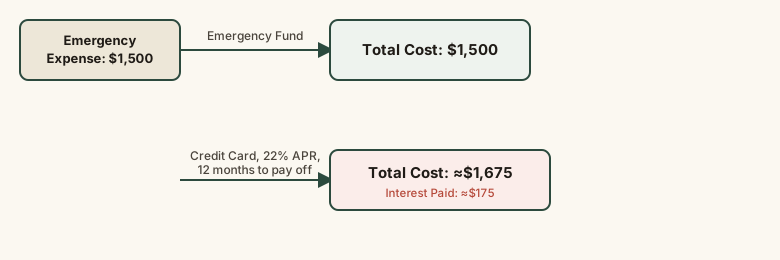
Both paths cover the exact same $1,500 repair — the only difference between them is whether interest gets added, which is entirely a function of whether cash was available or borrowing was necessary.
Common mistakes
Common Mistakes
Sizing an emergency fund off total income instead of essential expenses.
→ Base the target on essential, non-discretionary monthly costs (housing, utilities, food, insurance, minimum debt payments) — that's what actually needs covering during a real emergency.
Keeping the emergency fund in the same account as everyday spending money.
→ Use a separate account so the fund doesn't blend into regular spending and quietly shrink over time.
Investing the emergency fund in something that can lose value (stocks, for example) to chase higher returns.
→ Keep it in a liquid, stable account — the fund's job is to be reliably there when needed, not to maximize growth.
Common misconception
“An emergency fund needs to cover a full year of income to be considered 'real' protection.”
A full year of income is well beyond the commonly cited general benchmark of three to six months of essential expenses. Sizing a fund off total income (rather than essential expenses) and stretching the timeframe unnecessarily can make the goal feel unreachable and discourage starting at all — a smaller, genuinely achievable target based on essential expenses is more useful in practice than an oversized target based on the wrong inputs.
Try it yourself
What to do next
What to do next
- Calculate essential monthly expenses (not total income) as the base for any emergency fund target.
- Keep the fund in a separate, liquid account rather than blended into everyday checking.
- Start with a smaller, genuinely achievable milestone (even one month of expenses) rather than being discouraged by a larger long-term target.
- Discuss the right target size for your specific situation with a financial advisor rather than applying a general benchmark uncritically.