 KnowThis
Key Takeaways
Key Takeaways
- 1A digital footprint isn't one file sitting somewhere — it's the sum of many separate data trails left across different sites, apps, and devices, most of which never talk to each other directly.
- 2Footprints split into two kinds: active (things you deliberately share, like a post or review) and passive (things collected automatically in the background, like a device ID or a location ping).
- 3The privacy-relevant step isn't any single trail being collected — it's when separate trails get matched to the same person through a shared identifier, turning scattered fragments into one usable profile.
The concept
Every downstream privacy question — who can see what you did, how targeted an ad feels, whether a stranger can find your address from a username — traces back to that one mechanism: separate trails, collected in separate places, matched together by a shared identifier into one profile. For what that combined profile can actually reveal about a person, see what your digital footprint actually reveals.
Why is a single data point, like one online purchase, usually not a meaningful privacy risk on its own?
Worked examples
Example 1: An active footprint left on purpose (baseline case)
What makes the restaurant review an example of an 'active' footprint specifically?
Example 2: Passive trails matched without a deliberate post (edge case / variation)
Someone believes they have no digital footprint because they never post online. What's the flaw in that belief?
Example 3: Deleting one account doesn't erase the matched profile (real-world / applied case)
A user deletes an old social media account, expecting their "online presence" to disappear. Their username stops resolving, their posts stop being visible, and that particular active trail is gone. But a data broker had already matched that account's email address to purchase records, browsing cookies, and a mobile advertising identifier months earlier — and that matched profile lives in the broker's own systems, entirely separate from the deleted account. Deleting the account removed one trail at the source; it did nothing to unwind matches that had already been made from copies of that trail elsewhere.
After deleting a social media account, why might a matched profile built from that account's data still exist elsewhere?
How it works (visual)
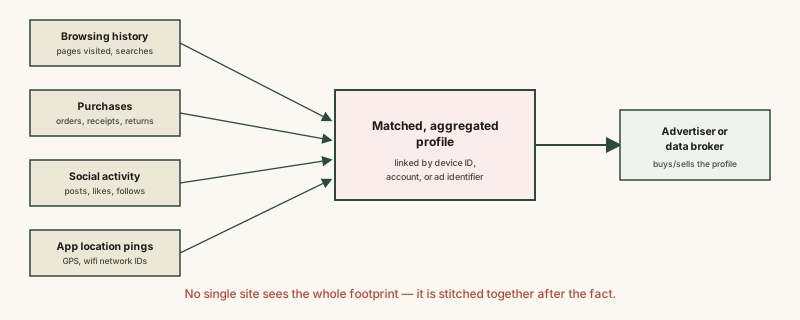
No box on the left can see the other boxes' data. The aggregation only happens in the middle, once a shared identifier lets separate trails be recognized as belonging to the same person.
Common mistakes
Common Mistakes
Assuming a digital footprint is one file or record that lives in a single place.
→ Treat it as many separate, unrelated data trails that only become one profile when a third party deliberately matches them using a shared identifier.
Believing that never posting on social media means having no meaningful footprint.
→ Remember passive footprint data — device IDs, location pings, cookies — accumulates from ordinary browsing and app use regardless of whether anyone ever posts publicly.
Thinking deleting an account erases every trace of data that was ever linked to it.
→ Recognize that deletion removes the trail at its original source, but copies already matched and stored by advertisers or data brokers are separate and not automatically affected.
Common misconception
“If I've never posted anything personal online, I don't have a digital footprint worth worrying about.”
Most of a typical footprint is built passively, not actively. An active footprint requires deliberately posting or submitting something, but a passive footprint accumulates automatically from device identifiers, location pings, and cookies during completely ordinary browsing and app use — no posting required. Someone with zero social media accounts can still have a detailed profile built from purely passive signals.
What to do next
What to do next
- Separate the two categories in your own mind: what you actively post (which you can usually delete) versus what's passively collected in the background (which requires adjusting device and app settings, not just deleting a post).
- Check your phone's location and app-permission settings periodically — passive footprint growth is driven largely by background permissions you granted once and forgot about.
- Don't assume deleting an old account undoes data already matched and stored by a third party — treat prevention as more reliable than after-the-fact removal.
- Read What App Permissions Are Actually Granting Access To next to see exactly which background data sources feed the passive side of a footprint.