 KnowThis
Key Takeaways
Key Takeaways
- 1A single conversation, no matter how good it felt, fades from a busy contact's memory quickly without something reinforcing it afterward.
- 2A prompt, specific follow-up — sent within about 48 hours and referencing something concrete from the conversation — does more to build a lasting connection than the conversation itself often does.
- 3Following up only when you need something again, rather than periodically, turns the relationship transactional and undercuts the trust a good follow-up would otherwise build.
The concept
Once follow-up is understood as the first real link in a trust chain rather than a polite afterthought, the practical shape of a good one follows: prompt, specific, and not immediately asking for anything else.
Why does a follow-up sent within about 48 hours of a networking conversation tend to be more effective than one sent weeks later?
Worked examples
Example 1: A specific thank-you after an informational interview (baseline case)
After a helpful informational interview, someone sends a short thank-you within a day, referencing a specific piece of advice the person gave and mentioning they plan to act on it. Months later, when they follow up again to report what actually happened after trying that advice, the contact remembers the conversation clearly — not because it was especially long or memorable on its own, but because the specific, prompt follow-up reinforced it right when it would otherwise have started fading.
Example 2: A strong conversation that fades from no follow-up (edge case / variation)
In this example, why does the hiring manager think of the candidate who followed up, rather than the other candidate whose conversation may have been just as good?
Example 3: Periodic light-touch follow-up over a year (real-world / applied case)
After an initial conversation, someone keeps in occasional, light contact with a new professional connection over the following year — a congratulations on a work anniversary, a relevant article shared without any ask attached, a brief update every few months. None of these individually asks for anything. A year later, when that contact hears about a relevant opening, they think to mention it unprompted, because the relationship had been quietly, genuinely maintained the whole time rather than appearing only once, at the moment something was needed.
Why did the periodic, no-ask follow-up over a year make the contact more likely to mention the opening on their own, compared to reaching out only once an opening was needed?
How it works (visual)
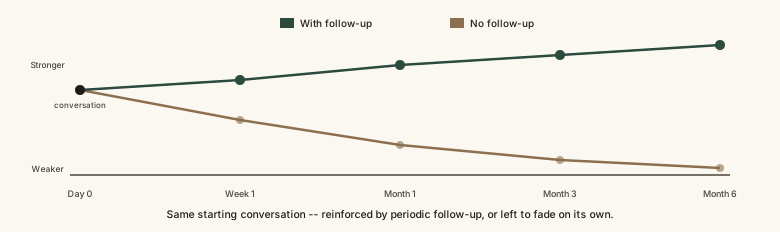
Both lines start at the exact same point — the same conversation. What diverges afterward isn't the quality of that first exchange, it's whether anything reinforced it.
Common mistakes
Common Mistakes
Not following up at all after a conversation that went well.
→ Send a short, specific note within about 48 hours — memory of the specifics fades fast without it.
Sending a vague, generic thank-you with no reference to the actual conversation.
→ Mention something concrete the person said or shared — specificity is what makes a follow-up register as genuine, not templated.
Only ever following up when you need something from the contact again.
→ Include occasional, no-ask touchpoints too — a relationship that only appears alongside a request reads as transactional.
Common misconception
“If a networking conversation genuinely went well, the other person will remember you without needing a follow-up.”
Goodwill from a single conversation fades quickly on its own, especially for people who have many similar conversations. A follow-up isn't a formality layered on top of a good conversation — it's often the actual mechanism that turns a pleasant but forgettable exchange into a real, lasting connection. The strength of the original conversation matters less than whether anything reinforced it afterward.
What to do next
What to do next
- Send a specific, genuine follow-up within about 48 hours of any real networking conversation.
- Set a personal reminder to check in with valuable contacts every few months, even with no specific ask.
- When you actually use someone's advice, report back and tell them what happened.
- Read What Networking Actually Means (It's Not Just Small Talk) next for the broader relationship-building context this follow-up habit supports.