 KnowThis
Key Takeaways
Key Takeaways
- 1Citizen science lets volunteers contribute real research-grade data, giving scientists geographic and temporal coverage far beyond what a small professional team could achieve alone.
- 2Data quality is maintained through validation systems — photo evidence, expert review, or cross-referencing multiple observations — not by assuming every volunteer submission is automatically research-grade.
- 3Long-running citizen science datasets, some spanning decades, have become foundational data sources for tracking species range shifts, population trends, and the timing of seasonal events.
The concept
Because coverage and validation trade off against each other, most well-designed citizen science projects put real thought into how submissions get checked before they're used in research.
Why is data validation an important design feature of citizen science platforms, rather than an afterthought?
Worked examples
Example 1: A bird-observation platform (baseline case)
Example 2: A misidentified submission caught by validation (edge case / variation)
Example 3: A century-long citizen science dataset used in climate research (real-world / applied case)
What makes a century-long citizen science bird count dataset especially valuable for climate research, compared to a shorter professional study?
How it works (visual)
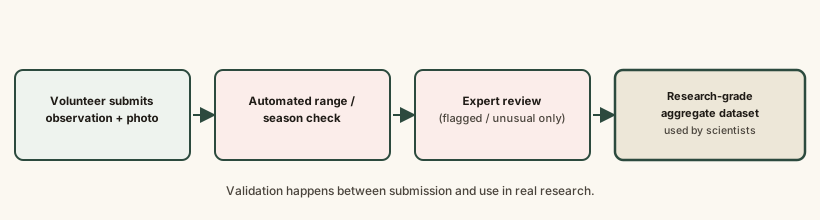
Each stage filters and checks the data before it reaches the aggregate dataset researchers actually use — the volunteer's observation is the raw input, not the finished data product.
Common mistakes
Common Mistakes
Assuming citizen science data is automatically low-quality or unscientific because non-experts collect it.
→ Recognize that well-designed platforms use validation systems (photo evidence, expert review, statistical correction) that make aggregate citizen science datasets genuinely research-grade, cited in peer-reviewed studies.
Assuming every individual citizen science submission is equally reliable.
→ Understand that individual submissions can contain errors — the scientific value comes from the aggregate dataset after validation, not from treating each single observation as certain.
Thinking citizen science volunteering requires specialized scientific training to contribute meaningfully.
→ Recognize most platforms are designed for non-expert participation, with built-in tools (photo upload, guided identification, expert review) specifically so untrained volunteers can contribute usable data.
Common misconception
“Citizen science is a lesser, unscientific substitute for 'real' professional research.”
Citizen science datasets, when built with proper validation systems, are cited in peer-reviewed scientific literature and provide geographic and temporal coverage that professional research teams alone often cannot achieve. It is a genuine, widely used research methodology, not an amateur alternative to real science — the two approaches are frequently combined, with professional researchers designing studies and analyzing citizen-collected data.
What to do next
What to do next
- Look up a citizen science platform relevant to your interests (birds, water quality, astronomy, insects) and try submitting a single observation to see the validation process firsthand.
- If you're already a hobbyist naturalist, photographer, or outdoor enthusiast, consider whether your existing observations could be logged through a structured citizen science platform instead of staying private.
- Check whether a local conservation organization runs volunteer monitoring programs for a species or habitat you care about.
- Read the marine-protected-areas and rewilding-projects entries in this cluster, both of which rely partly on citizen and community monitoring data in real conservation programs.