 KnowThis
Key Takeaways
Key Takeaways
- 1"Breaking news" is an editorial judgment based on timeliness and significance, applied by a newsroom in the moment — it's a label about urgency, not a certification of accuracy or lasting importance.
- 2Breaking coverage is disproportionately likely to contain early errors or incomplete details, precisely because it's published before full verification is possible, under real time pressure.
- 3Wire services like the Associated Press and Reuters are frequently the first to publish breaking details, which many other outlets then republish or build on almost immediately.
The concept
Recognizing "breaking" as an editorial-urgency label, not an accuracy guarantee, changes how a careful reader should treat the very first version of any fast-moving story.
A breaking-news alert reports an initial death toll from a disaster that gets revised downward significantly over the following 24 hours. Does this revision indicate the initial report was published in bad faith?
Worked examples
Example 1: A story that is both breaking and highly significant (baseline case)
Example 2: A significant story that is not breaking (edge case / variation)
Example 3: A breaking story of limited lasting significance (real-world / applied case)
Why do many different news websites often publish nearly identical wording within minutes of each other when a major story breaks?
How it works (visual)
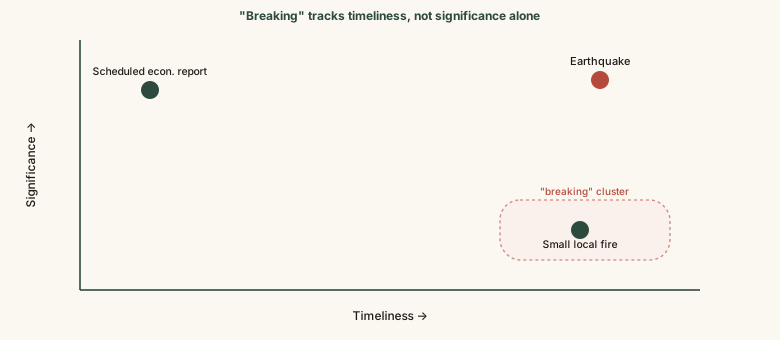
"Breaking" tracks the horizontal timeliness axis specifically — it's a real and useful signal, but reading it as a stand-in for overall importance conflates two genuinely separate editorial judgments.
Common mistakes
Common Mistakes
Treating the very first breaking-news figures (casualty counts, damage estimates) as final and unlikely to change.
→ Treat early breaking figures as provisional by default, and expect legitimate revisions as more complete information becomes available over the following hours or days.
Assuming 'breaking' automatically means 'most important story of the day.'
→ Judge lasting significance separately from timeliness — a scheduled, non-breaking report can matter more in the long run than a fast-moving but ultimately minor breaking story.
Assuming near-identical wording across many outlets proves independent confirmation of a story.
→ Recognize that shared wording often traces back to a single wire-service report being republished by many outlets, not independent verification by each one.
Common misconception
“A story revised or partly corrected after its initial breaking-news report must have been reported irresponsibly.”
Responsible breaking-news practice explicitly anticipates that early details will be incomplete — the presence of timely follow-up corrections is generally a sign of a newsroom doing its job properly as more verified information arrives, not evidence that the initial report was careless. The absence of any correction on a fast-moving story is, if anything, more worth scrutinizing.
What to do next
What to do next
- Treat the earliest breaking-news figures and details as provisional, and expect legitimate updates over the following hours.
- Separate 'is this breaking' (a timeliness judgment) from 'is this actually important' (a significance judgment) when deciding how much weight to give a story.
- Notice when multiple outlets use near-identical wording on a fast-moving story — it likely traces back to one shared wire-service report, not independent confirmation.
- Give a fast-moving story a day or two before treating its early details as settled fact, especially casualty or damage figures.