 KnowThis
Key Takeaways
Key Takeaways
- 1A divorce is legally final only once a court issues a divorce decree — separating, moving out, or informally agreeing to end a marriage doesn't itself end it in the eyes of the law.
- 2Divorces are broadly either uncontested (both spouses agree on terms in advance) or contested (a judge decides disputed terms), and this distinction is the single biggest factor in cost and timeline.
- 3The divorce decree is the document that actually governs post-divorce obligations — support, custody, and property division — and each side remains legally bound by its specific terms.
The concept
Because the decree is what legally ends the marriage, its specific written terms — not the couple's informal understanding — are what actually governs enforceable obligations afterward.
Is a couple legally divorced once they've separated and informally agreed on how to split things, even before any court paperwork is finalized?
Worked examples
Example 1: An uncontested divorce (baseline case)
Example 2: A contested divorce over custody (edge case / variation)
Example 3: Enforcing a divorce decree's terms (real-world / applied case)
What makes a divorce decree's terms different from an informal agreement two former spouses might make between themselves after separating?
How it works (visual)
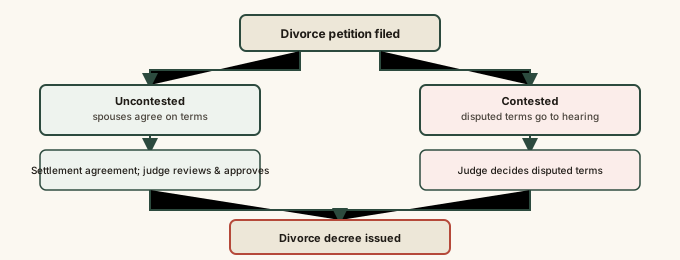
Both paths end at the same required step — a court-issued decree — but the road to get there differs substantially in cost, time, and how much a judge actively decides versus simply approves.
Common mistakes
Common Mistakes
Assuming separation or an informal agreement is legally equivalent to being divorced.
→ Recognize the marriage remains legally intact — for purposes like remarriage or tax filing status — until a court issues the final divorce decree.
Not reading the divorce decree's specific terms carefully before it's finalized.
→ Review the decree's exact language on support, custody, and property division, since that written document — not an earlier informal understanding — is what's legally enforceable afterward.
Assuming a settlement agreement between spouses is automatically final without court approval.
→ Understand that a judge still reviews and must approve a settlement agreement before it becomes part of the binding divorce decree.
Common misconception
“Getting divorced always means going to trial and having a judge decide everything.”
Many divorces are uncontested — both spouses agree on the major terms in advance, and the judge's role is largely to review and approve a settlement agreement rather than actively deciding disputed issues. Even in a contested divorce, only the genuinely disputed terms typically go before a judge for decision; agreed-upon terms are simply incorporated into the final decree. A full contested trial over every issue is the less common, not the default, outcome.
What to do next
What to do next
- Confirm the specific filing requirements, waiting periods, and residency rules for divorce in the relevant jurisdiction.
- Keep copies of the final divorce decree in a safe, accessible place — it's often needed later for name changes, remarriage, or benefits.
- Review the decree's specific terms on support, custody, and property carefully before it's finalized, since those exact terms become legally binding.
- Consult a licensed family law attorney, especially for any contested issue or a case involving children or complex property.