 KnowThis
Key Takeaways
Key Takeaways
- 1A will is written evidence of intent, not an instant transfer — it only takes legal effect once a probate court validates it after the testator's death.
- 2Three elements make a will legally recognizable almost everywhere: it names an executor, it's in writing, and it's signed and witnessed according to the required formalities.
- 3Dying without a valid will (intestate) means a state or country's default inheritance formula decides who gets what — not the deceased person's actual wishes.
The concept
Because a will only works if it clears the formal requirements, most of what can go wrong with one happens before death — in how it was written or signed — not after.
Does a will legally transfer property to beneficiaries the moment the testator dies?
Worked examples
Example 1: A straightforward, validly executed will (baseline case)
Example 2: A will that's missing a required witness (edge case / variation)
Example 3: Updating a will after a major life change (real-world / applied case)
What happens if someone dies without a valid will?
How it works (visual)
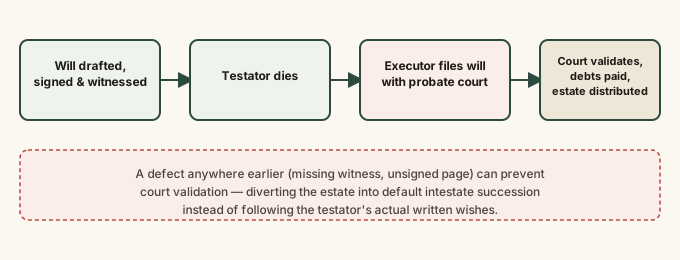
Each step depends on the one before it — a defect anywhere earlier in the sequence (a missing witness, an unsigned page) can prevent the later steps from happening as the testator intended.
Common mistakes
Common Mistakes
Assuming a will avoids probate entirely.
→ A will is actually a set of instructions for the probate process, not an alternative to it — avoiding probate generally requires different tools (like certain trusts), which a will alone doesn't provide.
Writing or updating a will without meeting the jurisdiction's signing/witnessing formalities.
→ Confirm the exact formal requirements (witness count, notarization, self-proving affidavits) for the relevant state or country with a licensed attorney before relying on a self-drafted document.
Never revisiting a will after a major life event (marriage, divorce, a new child, a large asset purchase).
→ Review and, if needed, formally update the will after any major life change rather than assuming an old version still reflects current wishes and family structure.
Common misconception
“Having any will at all means an estate skips court involvement entirely.”
A will is filed with, and validated by, a probate court — it's the input to that court process, not a way around it. What a will does accomplish is giving the court clear, documented instructions to follow instead of applying a jurisdiction's generic default distribution rules, which is a meaningfully different (and usually faster, less contested) outcome than dying intestate, even though court involvement itself still happens either way.
What to do next
What to do next
- Confirm the specific signing and witnessing requirements for a will in your jurisdiction before drafting or finalizing one.
- Name both an executor and at least one backup executor in case the first choice is unable to serve.
- Store the signed original somewhere the executor can actually find and access it, and tell them where it is.
- Review the will after any major life event and consult a licensed estate attorney for anything beyond the most basic situation.