 KnowThis
Key Takeaways
Key Takeaways
- 1A contract is generally binding once four elements are present: a clear offer, an acceptance of that offer's exact terms, consideration exchanged by both sides, and mutual intent to be legally bound.
- 2Neither a formal written document nor a signature is strictly required for many everyday contracts — a verbal agreement or a simple exchange (like paying a vendor for goods) can be just as enforceable, though written contracts are far easier to prove.
- 3Changing any term of an offer when responding to it generally creates a counteroffer, not an acceptance — which resets the negotiation rather than forming a contract on the original terms.
The concept
The practical upshot is that plenty of everyday exchanges — paying a mechanic, hiring a freelancer over a text thread, agreeing to a verbal side job — can meet the legal bar for a binding contract even without a single signature involved.
Two people agree over text: one offers to sell a used bike for $150, and the other replies 'I'll take it for $120.' Has a contract been formed on the original $150 offer?
Worked examples
Example 1: A simple exchange (baseline case)
Example 2: A counteroffer that resets the deal (edge case / variation)
Example 3: An agreement missing intent to be bound (real-world / applied case)
Why might a written signature not be strictly necessary for many everyday contracts?
How it works (visual)
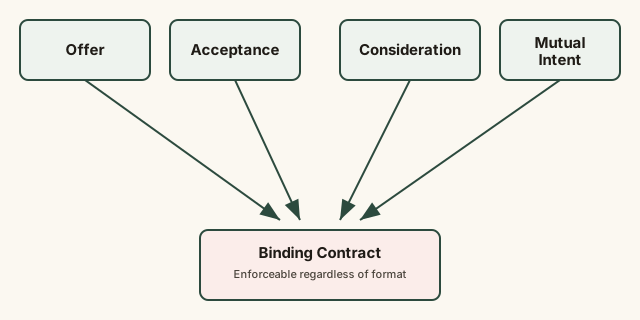
When all four boxes are checked, an agreement is generally enforceable regardless of whether it was written, typed, or spoken aloud.
Common mistakes
Common Mistakes
Assuming an agreement isn't real or binding unless it's written down and signed.
→ Recognize that many verbal and informal agreements can still be legally binding — writing something down mainly makes it easier to prove later, not more valid to begin with.
Treating a reply that changes any term as an acceptance of the original offer.
→ Understand that changing a price, deadline, or quantity generally creates a counteroffer instead, which restarts the negotiation rather than sealing a deal.
Believing that simply calling a document a 'contract' automatically makes it enforceable.
→ Check for the actual underlying elements — offer, acceptance, consideration, and mutual intent — since the label on a document doesn't substitute for them.
Common misconception
“A contract isn't real or enforceable unless it's a formal typed document with signatures from both parties.”
Many everyday agreements — a verbal deal, a text exchange, a handshake — can meet all the legal requirements of a binding contract without any formal document at all. What actually matters is whether an offer, an acceptance, consideration, and mutual intent are present, not the format the agreement takes. Certain categories of agreements do require a writing under the statute of frauds, but that's a specific exception, not the general rule.
What to do next
What to do next
- Before agreeing to anything of real value, confirm the core terms — price, timing, and what each side is giving up — are stated clearly enough that both sides understand exactly what was agreed.
- Put meaningful agreements in writing even when not strictly required, since a writing is far easier to rely on later than a memory of a conversation.
- If a response to your offer changes any term, treat it as a new counteroffer rather than assuming a deal is already final.
- For any agreement involving real estate, a long time period, or a significant amount of money, consult a licensed attorney about whether your jurisdiction requires a written contract.