 KnowThis
Key Takeaways
Key Takeaways
- 1Carpet padding is rated by two separate properties, density and thickness — density is the one that actually determines how long the carpet above it lasts.
- 2A thick, low-density pad feels soft underfoot at first but compresses permanently under repeated traffic, letting the carpet backing flex more with each step and wear out faster.
- 3Carpet manufacturers specify a maximum padding thickness and minimum density for warranty coverage — using an unlisted pad can void the carpet's warranty even if the carpet itself is undamaged.
The concept
This distinction matters most in high-traffic areas — hallways, stairs, in front of a couch — where the flexing cycle repeats far more often than in a rarely used guest room, so a durability mismatch shows up there first and fastest.
Why might a thick, soft-feeling carpet pad actually lead to the carpet wearing out faster than a thinner, denser pad?
Worked examples
Example 1: A dense pad in a hallway (baseline case)
A hallway with steady daily foot traffic is installed with a manufacturer-recommended 3/8-inch, 8-pound-density pad. Even after years of repeated footsteps, the pad resists fully compressing, so the carpet backing above it continues flexing within its designed range each time someone walks through. This is the baseline case the manufacturer's specification is built around — matching pad density to expected traffic keeps the carpet performing near its full rated lifespan.
Why does a dense pad hold up well specifically in a high-traffic hallway?
Example 2: A thick, low-density pad under a bed (edge case / variation)
Why might a bedroom carpet show a visibly worn strip right next to the bed, even though the room overall has low traffic?
Example 3: Using an oversized pad and voiding a carpet warranty (real-world / applied case)
A homeowner installs a carpet with a thicker, plusher pad than the manufacturer's specification sheet recommends, reasoning that more cushioning can only help. Within the warranty period, the carpet develops visible matting and backing wear in high-traffic areas, and when a warranty claim is filed, the manufacturer denies it because the installed pad exceeds the maximum thickness and falls below the minimum density listed in the warranty terms. The carpet itself wasn't defective — the pad mismatch accelerated wear in a way the manufacturer had explicitly warned against, and documented, in its own installation requirements.
Why might a carpet manufacturer deny a warranty claim for premature wear, even if the carpet fiber itself seems otherwise undamaged?
How it works (visual)
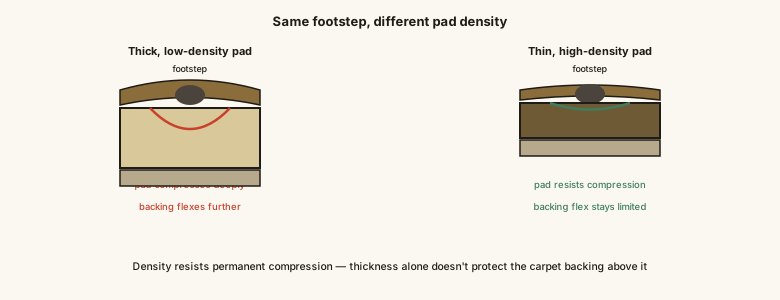
Same footstep, same body weight — the denser pad on the right resists compressing as far, which limits how much the carpet backing above it has to flex.
Common mistakes
Common Mistakes
Choosing carpet padding based on how thick or soft it feels in a showroom.
→ Check the pad's density rating (pounds per cubic foot) and match it, along with thickness, to the carpet manufacturer's specification sheet.
Assuming a thicker pad than recommended is a free upgrade with no downside.
→ Stay within the manufacturer's maximum thickness and minimum density requirements — exceeding them can accelerate wear and void the carpet's warranty.
Using the same pad choice for both low-traffic and high-traffic rooms.
→ Favor a denser pad in high-traffic areas (hallways, stairs, living rooms) where repeated flexing accumulates fastest.
Common misconception
“A thicker, softer carpet pad is simply a better, more premium choice.”
Thickness affects comfort underfoot, but it's density — the weight of material packed into each cubic foot of pad — that actually determines how long the carpet above it lasts. A thick, low-density pad can feel plush at first but permanently compresses under repeated foot traffic, letting the carpet backing flex farther with every step than it's designed to, which accelerates wear specifically in high-traffic areas. Carpet manufacturers publish maximum thickness and minimum density requirements for exactly this reason, and exceeding the recommended thickness with a low-density pad is a documented way to shorten carpet life and potentially void its warranty, not a costless comfort upgrade.
What to do next
What to do next
- Check the carpet manufacturer's specification sheet for maximum pad thickness and minimum density before choosing padding, rather than picking by feel alone.
- Favor a denser, thinner pad (commonly around 3/8 inch, 6-8 lb density for residential stretch-in carpet) over a thicker, softer, low-density option.
- Use a denser pad specifically in high-traffic areas like hallways, stairs, and in front of frequently used furniture.
- Keep the receipt and pad specification on file in case a future warranty claim requires proving the installed pad met the manufacturer's requirements.