 KnowThis
Key Takeaways
Key Takeaways
- 1Simple interest is calculated only on the original principal, every period, for as long as the money sits.
- 2Compound interest is calculated on the principal plus all interest already earned, which means the base it's calculated on keeps growing.
- 3The two methods produce identical results in year one — the gap only appears and then widens starting in year two.
The concept
The examples below use the same principal and rate under both methods so the growing gap is easy to see directly.
In year one, how do simple interest and compound interest amounts compare on the same principal and rate?
Worked examples
Example 1: $5,000 at 4% over 3 years (baseline case)
Example 2: The same $5,000 at 4% over 20 years (edge case / long horizon)
Example 3: Why compounding frequency also matters (real-world / applied case)
Two savings accounts both advertise the same 4% nominal annual rate, but one compounds monthly and the other compounds annually. Will they earn the exact same amount of interest over a year?
How it works (visual)
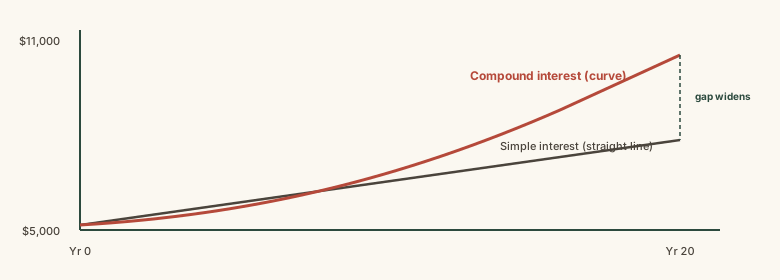
The straight line represents a fixed dollar amount added every year; the curve represents a dollar amount that itself gets larger every year, since it's calculated on an ever-growing balance.
Common mistakes
Common Mistakes
Assuming simple and compound interest will always produce noticeably different results.
→ Check the time horizon — over a single year, the two methods produce identical results; the difference only becomes meaningful over multiple years.
Comparing two accounts by their nominal annual rate instead of their APY.
→ Compare APY directly, since it already accounts for how often each account compounds — nominal rate alone can be misleading.
Assuming compounding only benefits savers and never costs borrowers.
→ Recognize that compound interest works the same way on debt — credit card balances that aren't paid off in full compound against the borrower, which is why carried balances grow quickly.
Common misconception
“Compound interest and simple interest are two totally different types of financial products, not two ways of calculating the same thing.”
Simple and compound interest are two different calculation methods, not two different products — the same $5,000 deposit at the same 4% rate produces different totals depending only on which calculation method applies. Nearly all everyday deposit accounts use compound interest; the comparison matters mainly for understanding why a long-term balance grows faster than a straight-line estimate would suggest.
Try it yourself
What to do next
What to do next
- Compare savings accounts by APY, not by the nominal rate alone, since APY already reflects compounding frequency.
- Use the compound growth calculator above (not simple interest) to estimate realistic long-term savings growth in an ordinary deposit account.
- Remember that compounding works against you on debt too — an unpaid credit card balance compounds the same way a savings balance does.