 KnowThis
Key Takeaways
Key Takeaways
- 1Falls are the leading cause of home injury across most age groups, ahead of fires, poisoning, or cuts — a fact that reshapes where basic household safety attention is most usefully spent.
- 2A small, recurring set of fall hazards — loose rugs, clutter in walkways, poor lighting, wet floors — accounts for a large share of home falls, making them a high-value, low-effort target for prevention.
- 3Unattended cooking is the leading cause of home fires, which is why 'stay in the kitchen while something's on the stove' is disproportionately emphasized in home fire-safety guidance.
The concept
Knowing which hazard categories actually cause the most injuries — rather than which ones feel most alarming — is what makes prevention effort efficient rather than diffuse.
A household focuses its safety efforts heavily on fire extinguisher placement but does little about loose rugs and cluttered walkways. Based on home-injury data, is this prioritization well-matched to actual risk?
Worked examples
Example 1: Addressing a common fall hazard (baseline case)
Example 2: A less obvious fall risk — bathroom surfaces (edge case / variation)
Example 3: Securing household chemicals and medications from young children (real-world / applied case)
Why does poison-prevention guidance for households with young children emphasize secure storage of ordinary household chemicals and medications, rather than focusing on unusual or exotic substances?
How it works (visual)
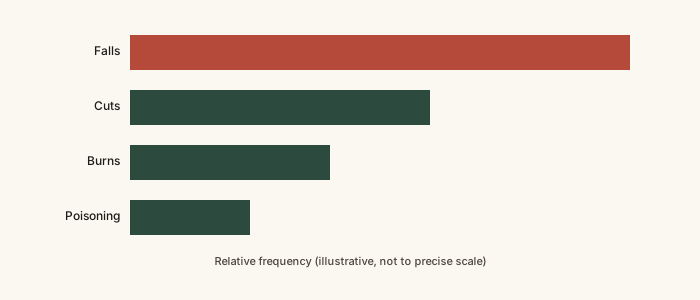
The relative bar lengths are exactly why fall-hazard reduction (securing rugs, improving lighting, clearing clutter) is emphasized as much as, or more than, fire or poisoning precautions in general home-safety guidance.
Common mistakes
Common Mistakes
Assuming falls are mainly a concern for older adults and not addressing fall hazards more broadly.
→ Recognize falls as the leading home-injury category across most age groups, not just older adults, and address common hazards (rugs, clutter, lighting) regardless of who lives in the home.
Leaving cooking unattended, even briefly, on an active stovetop.
→ Stay in the kitchen (or set a timer and check frequently) whenever something is actively cooking, since unattended cooking is the leading cause of home fires.
Storing household chemicals or medications within easy reach of young children.
→ Use secure, out-of-reach, ideally locked storage for chemicals and medications in any household with young children.
Common misconception
“Fires and poisoning are the biggest home-safety risks to plan around.”
Falls are consistently the leading cause of home injury across most age groups, ahead of fires or poisoning, per CDC and National Safety Council injury-surveillance data. This doesn't mean fire and poisoning precautions don't matter — it means fall-hazard reduction (securing rugs, improving lighting, clearing walkways, bathroom grab bars) deserves at least comparable attention, and is frequently underweighted relative to its actual share of home injuries.
What to do next
What to do next
- Secure loose rugs, clear cluttered walkways, and improve lighting near stairs and hallways.
- Add non-slip mats and consider grab bars in bathrooms, a disproportionately common fall location.
- Never leave active cooking on a stovetop unattended.
- Store household chemicals and medications securely out of reach, especially in homes with young children.
- Save the Poison Control number (US: 1-800-222-1222) somewhere accessible for quick reference in an emergency.